Who’s been killed, who’s in charge of Iran now – and who could be its new leader?
 by 0
by 0 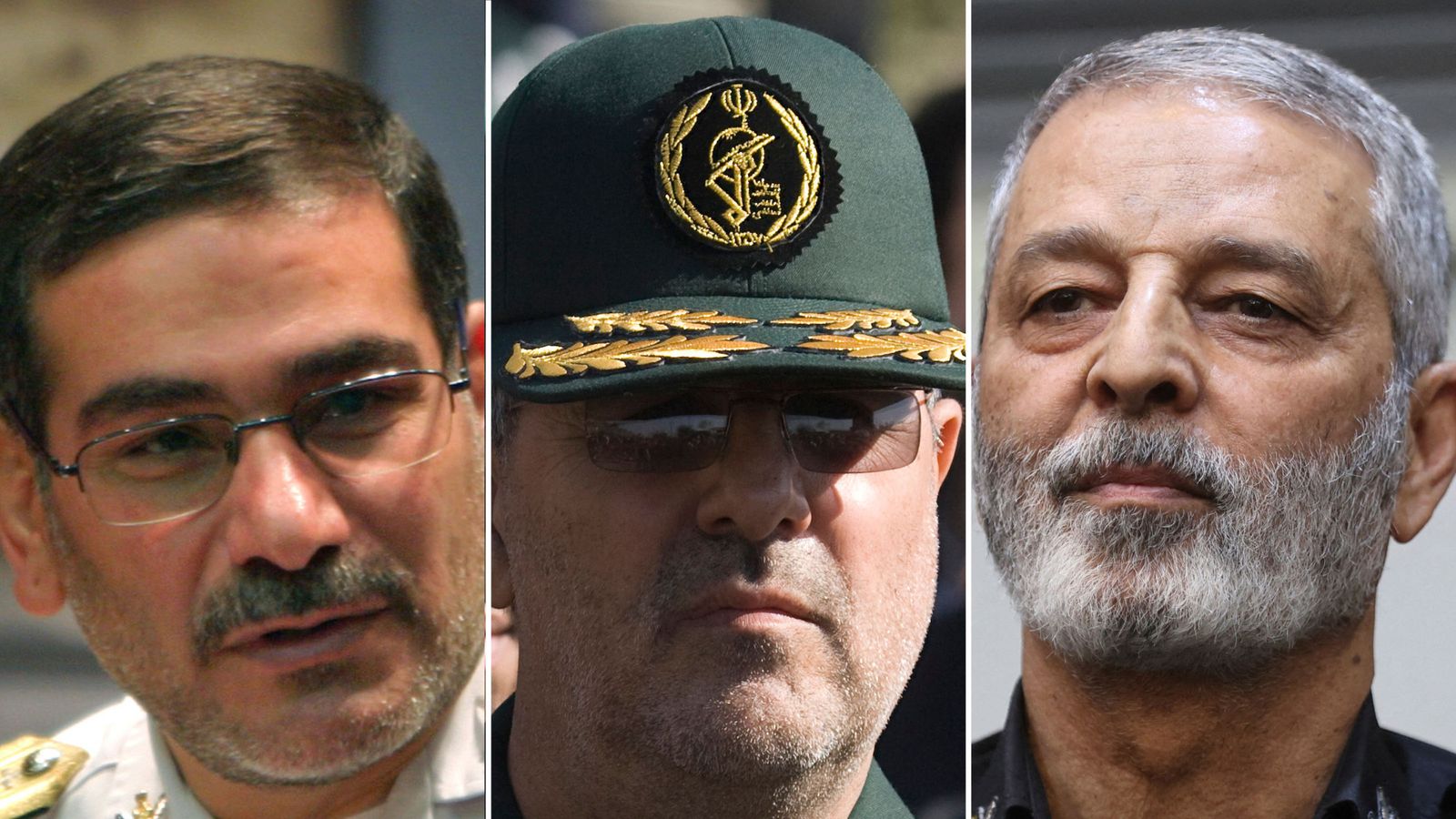
A week of attacks on Iran and the killing of its supreme leader and senior commanders have plunged Iran into crisis – who’s in charge now and who could take his place?
Which senior leaders have died?
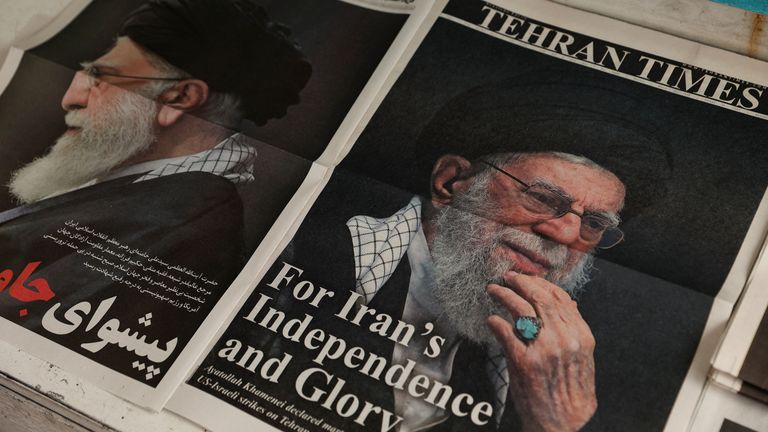
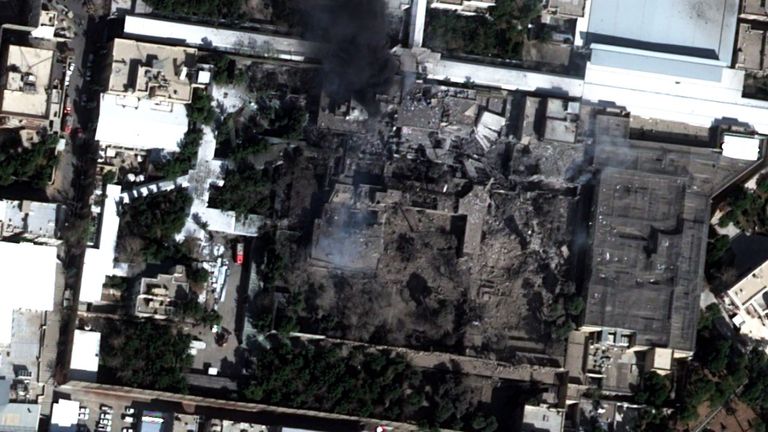
Ayatollah Ali Khamenei was the prize target and an Israeli strike on the first day of the war obliterated his Tehran compound, killing him and members of his family.
Latest live updates on Iran conflict
The 86-year-old had been in power for 37 years after taking over from the regime’s founder in 1989.
He had final say in all matters of state – above the country’s president – and led a system that brutally supressed public dissent and killed its own people.
Israel claimed 40 top military commanders were eliminated in the early airstrikes.
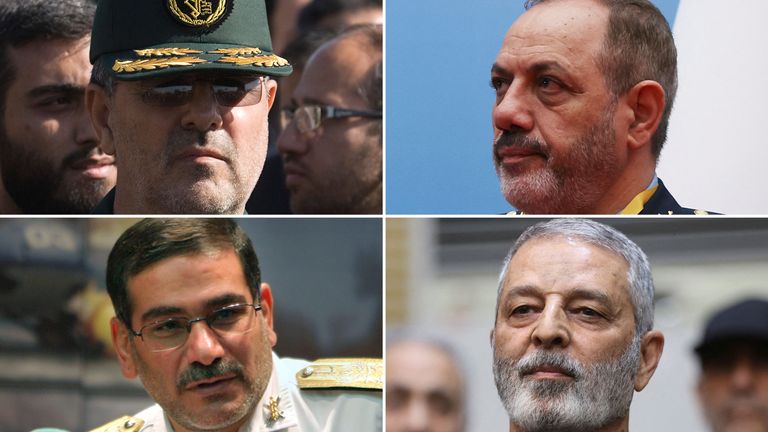
Among them are said to be armed forces chief of staff General Abdolrahim Mousavi and defence minister General Aziz Nasirzadeh.
Also reportedly killed was the head of the powerful Islamic Revolutionary Guard Corps (IRGC), Major General Mohammad Pakpour.
Pakpour had only been in the job since June, when he replaced Hossein Salami after he was killed in the 12-day war between Israel and Iran in June 2025.
Ali Shamkhani, a top security adviser to Khamenei, also died in airstrikes, according to Israel. He had been overseeing the recent negotiations with the US over Iran’s nuclear and missile programme.
Who’s in charge now?
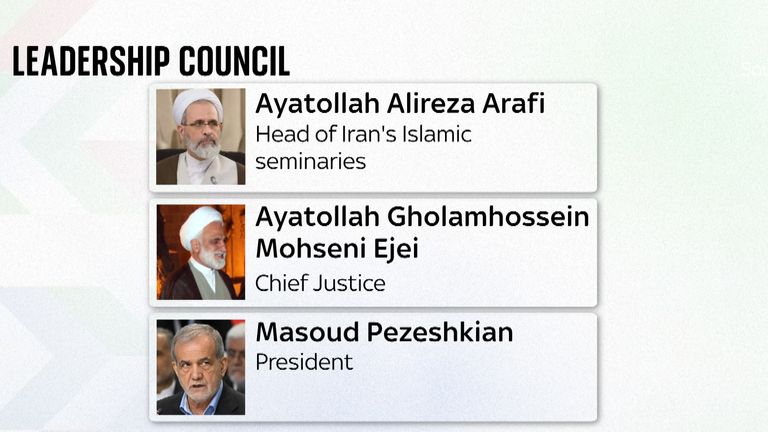
A three-person leadership council has temporarily assumed the duties of supreme leader, in line with Islamic Republic law.
It comprises Iranian President Masoud Pezeshkian, head of the judiciary and former intelligence minister Gholam-Hossein Mohseni-Ejei, and Ayatollah Alireza Arafi, head of Iran’s seminaries.
Ali Larijani, national security council secretary and top adviser to the slain supreme leader, is also likely to be playing a key role.
Following the US-Israeli airstrikes, he said on social media that Iran would not negotiate with US President Donald Trump and accused him of “delusional ambitions”.
Who chooses the new supreme leader?
An 88-member panel called the assembly of experts is deciding who will take over – although Mr Trump has said he also wants a say.
The panel is made up of Shia clerics whose candidacies are approved by Iran’s constitutional watchdog.
One member, Ayatollah Ahmad Khatami, told state TV the candidates had been identified but did not publicly name them.
Under the country’s law, the selection process must happen as soon as possible – and a decision is believed to be imminent.
The announcement could be withheld until the assembly is assured the new supreme leader is as safe, as far as possible, from enemy attacks.
Israel has promised to hunt down whoever is chosen.
Mr Trump has said he now wants to select the new Iranian leader – in a similar way in which a president sympathetic to the US was recently installed in Venezuela.
“We’re going to have to choose that person along with Iran,” he told the Reuters news agency
Who’s favourite to take over?
The supreme leader must be a senior figure with political and religious authority.
Khamenei’s power was often wielded through close advisers but it is unclear how many survived, and he was never publicly recorded as naming a successor.
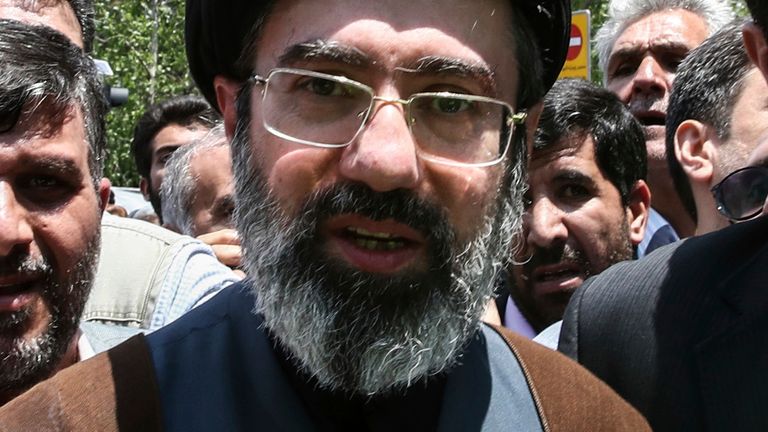
His son, Mojtaba Khamenei, is strongly believed to be the frontrunner and has long been tipped as potential successor.
He fought for a battalion of the IRGC in the Iran-Iraq War in the 1980s and he’s still believed to have close links to it.
The 56-year-old has great influence within Iran internally, despite being only a mid-ranking cleric and having never held government office.
A US diplomatic document disclosed by WikiLeaks in 2008 described him as “principal gatekeeper” to his father and “the power behind the robes”.
Hassan Khomeini – the grandson of the first supreme leader and founder of the republic Ayatollah Khomeini – is also believed to be a candidate.
However, his support for the reformist faction that’s been sidelined in recent decades makes him a less likely pick.
Ayatollah Alireza Arafi, one of the three on the temporary ruling council, is also thought to be under consideration.
Regime change
In the wake of Saturday’s first attacks, Mr Trump urged Iranians to overthrow the regime – which has been accused of murdering thousands of its own citizens in recent weeks.
He called it the “single greatest chance for the Iranian people to take back their country”.
Mr Trump claimed many in the IRGC, military and police forces “no longer want to fight”.
However, the feared IRGC still appears to have stayed loyal and there so far appears to be no signs of further popular uprisings on the streets.
Many experts say airstrikes alone cannot force a change and that a ground force would be needed.
Kurdish forces in neighbouring Iraq have told Sky News they are desperate to get involved but would need more support from the US to pave the way.
Before the Iranian revolution, Iran was ruled by a monarchy, with the king called the “shah”.
Reza Pahlavi, the US-based son of the shah who was deposed in the 1979 revolution, has said: “With [Khamenei’s] death, the Islamic Republic has in effect reached its end and will very soon be consigned to the dustbin of history.”