Is social media messing up our kids? Spain’s battle against doomscrolling schoolchildren
 by 0
by 0 
Is social media messing up our kids?
A growing number of European countries seem to think it’s causing a problem, as more and more consider bans or restrictions.
In an effort to get children to log off screens and into real life, Spain plans to ban under-16s from social media platforms.
For many adults, it seems to make sense, but how do young people feel about losing access?
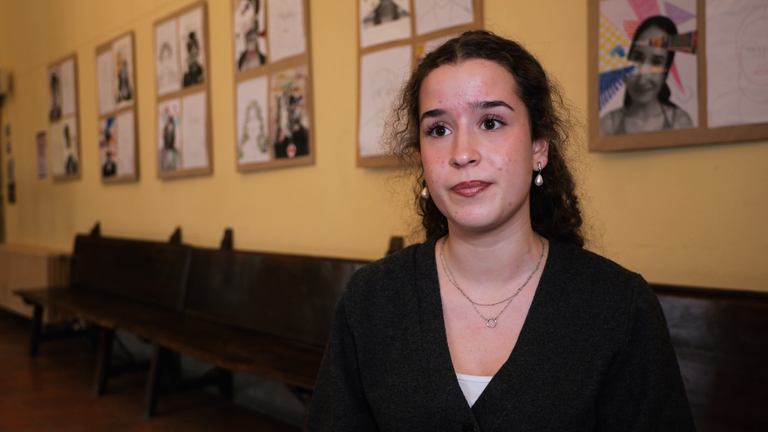
“I think as a society we have got to a point that we have to do something about it, and I think a ban is the best option,” 16-year-old Africa tells me.
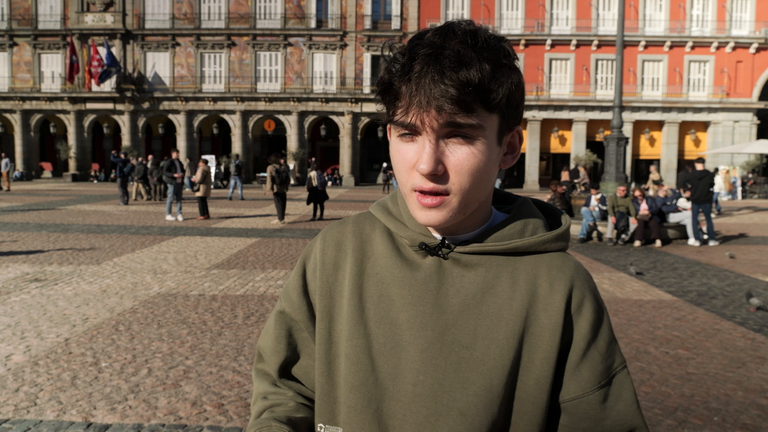
I’ve come to meet a group of 12- to 17-year-olds at Spain’s oldest secondary school in Madrid.
Much to my surprise, all of them support the restriction.
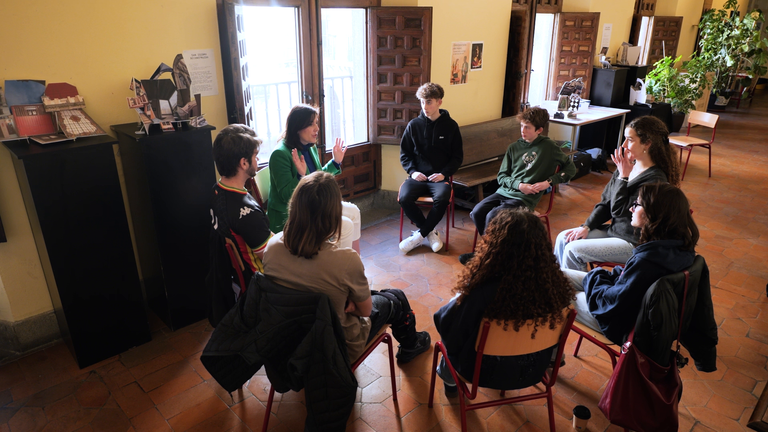
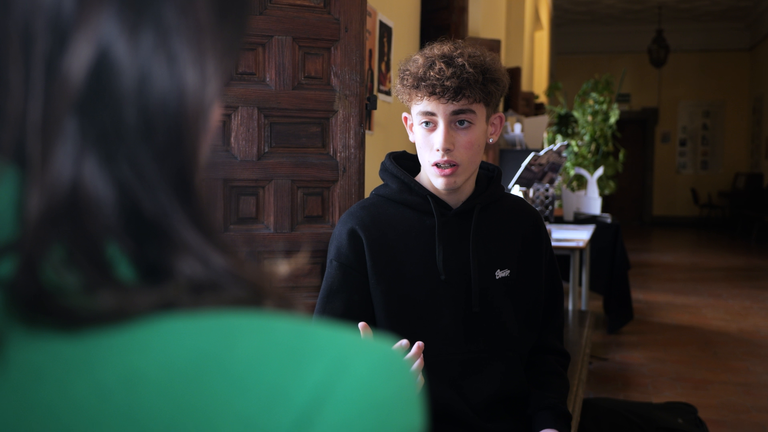
“I think that as long as private companies own these apps, there won’t be really positive things because the only thing that matters [to them] is that you spend more time in the app and for them to make more money,” 14-year-old Max explains.
Goodbye apps, hello school success
Like several of the other boys in the group, he said he has struggled in the past with social media addiction, spending hours doomscrolling at the expense of going out with friends.
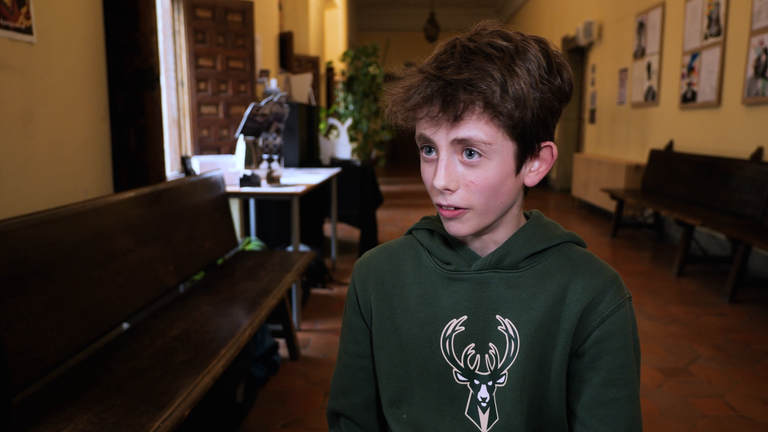
It’s a problem that’s also troubled 12-year-old Theo, the youngest in the group.
“I was five or six hours a day watching a screen and I failed three or four exams,” he said.
“My parents took off all those things [apps] and then I started to get good marks.”
Several of the girls in the group also have concerns about the impact of social media on their peers’ mental health.
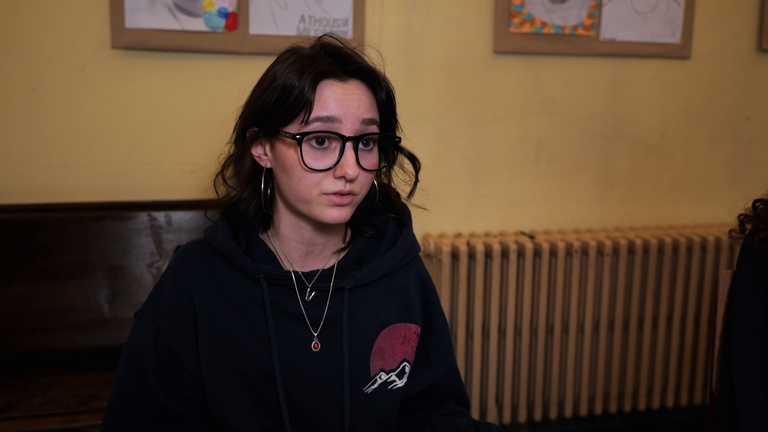
Elena, 16, and 17-year-old Vega explain that the algorithms often push endless streams of posts about “clean eating”, body image and beauty to teenage girls, leading some to become trapped in a cycle of unrealistic comparisons.
At times, they say it can feel relentless. “A lot of really young girls develop really fast eating disorders, for example, because of social media,” adds Vega.
While this group is pro-restrictions, they admit that not all their classmates agree.
“We had a debate in my class about this, and I noticed that mostly girls believe that the boundary is a good idea and guys think it’s not,” Vega continues.
A lost summer
While she supports government intervention, she also thinks teenagers need to learn self-control and limit their time online.
Her peers are more sceptical: “We are practically children; we don’t know how to do those things. We need external control,” Africa said.
“I don’t think teenagers have the ability to escape out of a system that is designed entirely around keeping them inside of that app,” agrees 17-year-old Beltran, who also lost a summer to social media addiction.
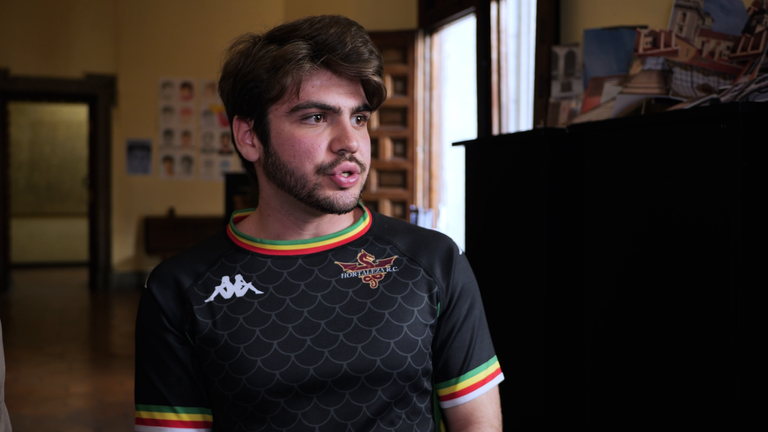
He says he felt numb after hours online, and his interest in other activities plummeted.
Spain’s Prime Minister Pedro Sanchez has called social media the digital “Wild West” and the under-16s ban is part of a raft of measures aimed at making children safer online.
Unnecessary overstep or necessary protection?
The government has also asked prosecutors to investigate potential crimes committed by Meta, X and TikTok in connection with the possible creation and dissemination of child porn using AI.
In early February, Sanchez said that in just 11 days, three million nude AI-generated images appeared on X, many of them depicting children.
In a post a few days later, X said, “We maintain zero tolerance for child sexual exploitation – including AI-generated content – and enforce strict policies to keep minors safe and ensure a positive experience for everyone.”
Despite the reassurances, an overwhelming majority of Spaniards support boosting restrictions online. An IPSOS poll in 2025 found 82% backed a social media ban for under-14s.
However, the statistics reveal a generational divide. While older people were overwhelmingly for it, only 41% of Gen Z gave a thumbs up for a ban in schools.
Few, though, could match the outrage of the owner of X, Elon Musk.
Following the announcement of the ban, he called the Spanish prime minister “a tyrant and a traitor to the people of Spain”.
Telegram’s owner, Pavel Durov, also waded in, warning the changes risk turning Spain into a surveillance state.
So who’s right? Is this the state overstepping, or a necessary protection?
Social media ‘made to hack the brain’
“Among girls and boys that have previously been using social media for hours, we see worse mental health,” explains psychologist Professor Silvia Alava Sordo.
“Social media platforms are made to hack the brain.”
She said the hormones rushing around teenagers’ rapidly developing bodies mean they can have far stronger reactions to likes or comments on social media than adults.
The professor likens it to the thrill people get from playing slot machines, and agrees that at such a formative age, children’s brains need to be protected.
Read more:
Will ‘tobacco trials’ haunt tech giants?
Instagram can be ‘problematic’, says app’s chief
Following Australia’s lead last year, Spain is just one of several European countries reconsidering children’s relationship with social media.
France is planning a ban for under-15s, and the UK has promised to make young people safer online.
Possible changes include phone curfews, restrictions on doomscrolling and a block for under-16s.
Madrid-based content creator Jon Echeverria Franco thinks it’s all a step too far, and worries platforms like WhatsApp could be lumped in with X and TikTok, restricting a popular communication tool.
“In my opinion, it’s not the same, I mean, with WhatsApp you speak with your classmates and on the other hand, on Twitter or TikTok, you can find dangerous information,” he said.
He also thinks the decision to block access should lie with parents, not the state. He’s also concerned that any legal restrictions could be a power grab by the Spanish government.
The Off Movement
Campaigner Diego Hidalgo Demeusois strongly disagrees and believes adults and children need to look at the impact of high connectivity on society.
His group, the Off Movement, have carried out stunts to try to get people to stop scrolling their lives away.
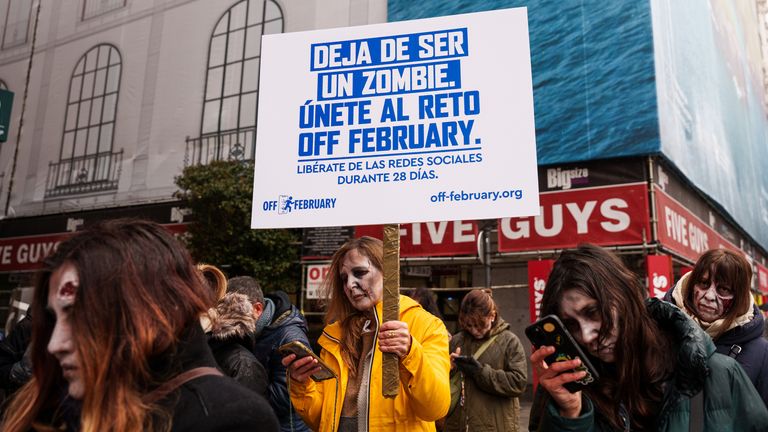
On one occasion, a horde of zombies holding mobile phones emerged from Madrid’s metro and walked through the city’s streets to promote “Off February”, an international campaign to get people to take a month-long digital detox.
As well as a social media ban for children, Hidalgo believes smartphones need to be age-restricted, claiming our screen dependency is causing people to be increasingly isolated and sedentary.
In short, he warns we are risking a global health emergency.
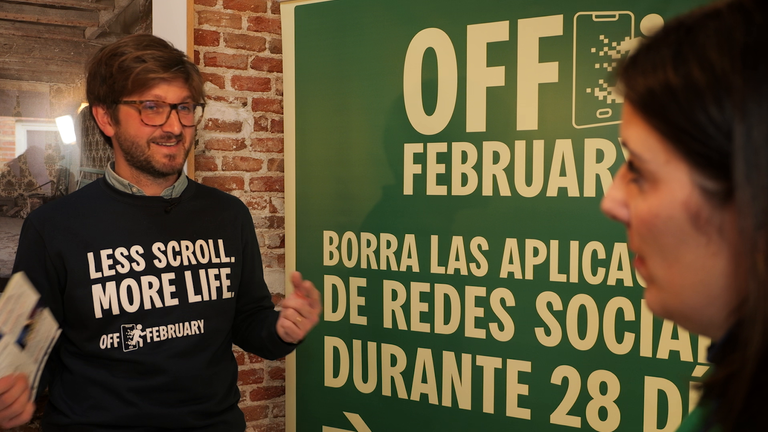
“Normally, if you’re addicted to something, one of the ways you can get out of that addiction is because other people around you are going to say you have to do something,” he said.
“But if everyone’s an addict around you, there are going to be fewer opportunities to actually quit that addiction.”
As I listen to his arguments, I think about all the hours I’ve lost to doomscrolling; the countless times face-to-face conversations or exercise that have been neglected for digital deep-dives.
I wonder if social media is the new smoking and whether in a few years time there will be a mass backlash, or if instead, we are all too far gone and will just continue facilitating and feeding each other’s habits.