2026 Daytona 500 preview: Your cheat sheet to the Great American Race
 by 0
by 0 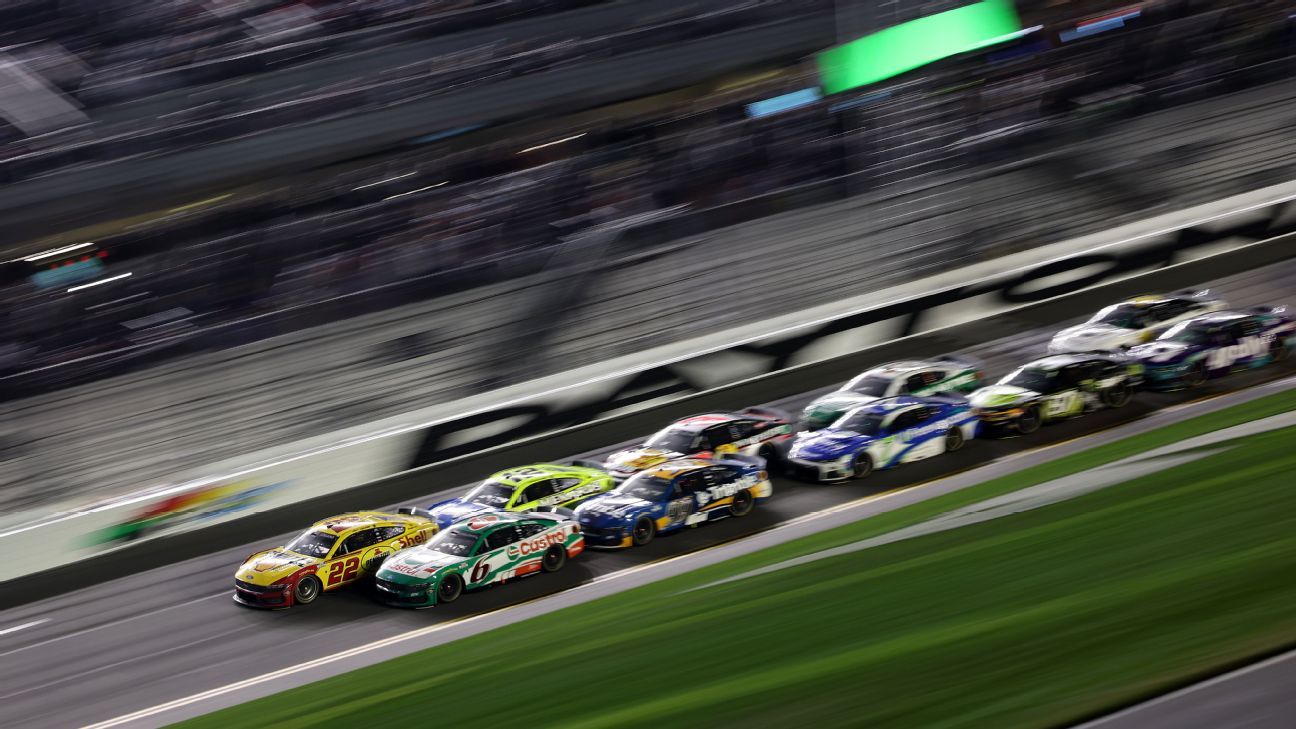
Watch your favorite events in the newly enhanced ESPN App. Learn more about what plan is right for you. Sign Up Now
Kyle Larson: 29 career wins; defending Cup Series champion, 0-for-12 in Daytona 500; best finish: 7th, 2016 and 2019
Chase Elliott: 19 career wins, son of two-time Daytona 500 winner Bill, 0-for-10 in Daytona 500; best finish: 2nd, 2021
Ryan Blaney: 17 career wins, 2023 Cup Series champion, 0-for-11 in Daytona 500; best finish: 2nd, twice, in 2017 and 2020
They all own NASCAR’s biggest prize, the ginormous Cup, but not NASCAR’s single biggest race award, the Harley J. Earl Trophy handed to the Daytona 500 winner. Earl was a legendary mid-20th century car designer, producing machines that looked like spaceships on wheels (including the one welded to the top of the Daytona trophy), and he was also the visionary behind the creation of the Chevy Corvette.
There are 19 Chevy Camaros in Sunday’s 41-car field (vs. 10 Ford Mustangs and 12 Toyota Camrys), and all will look different than they did one year ago, despite the Bowtie Brigade’s domination of the annual manufacturers’ title race between Chevy, Ford and Toyota. This year’s changes to the hood, side panels and nose are relatively subtle, but it’s that nose that everyone is curious about. Why? Because in the tight, conga line-style racing at Daytona, these cars bang bumpers as they push each other forward. Like, a lot. The shape of the nose means that 190-mph jigsaw puzzle pieces had better fit together perfectly or a punch of power will turn into a sideways shove that causes the dreaded “Big One” crash that eats racecars in bunches. Both of the big wrecks in Thursday night’s first qualifying race came via Chevy nasal misconnects.
Yes, and yes. And here’s another yes. He’s on the pole for the Great American Race, the first time he has started the 500 from the number one starting spot. On paper, that sounds awesome. And it is. But it also leads us to the craziest Daytona 500 stat, and all you need to know about the wackiness of this event.
The last time the racer who started first also finished first? Dale Jarrett … in 2000! That’s so long ago that Connor Zilisch, who is making his Daytona 500 debut using the same car number (88) that Jarrett made famous, wasn’t even born yet. It was so long ago that the number one movie at the box office was “Scream 3.” Later this month is the premiere of “Scream 7,” co-starring former Talladega grand marshal David Arquette.
The Daytona 500 is always a draw for famous people. This year’s grand marshal is comedian and Vanderbilt football superfan Nate Bargatze, joined by honorary pace car driver Kurt Russell. Long before he was Wyatt Earp or Star Lord’s deadbeat dad, heck even before he was the star of “The Computer Wore Tennis Shoes” (now streaming on Disney+!), Russell was a national champion racer.
Also expected to be in the house are Michael Jordan, co-owner of 23XI Racing with Hamlin (and co-suer of NASCAR in an antitrust lawsuit that thankfully was settled in December), Los Angeles Rams wide receiver Puka Nacua, who co-starred with 23XI’s Wallace in a Toyota Super Bowl commercial and is scheduled to get a ride around Daytona with Wallace on race morning. If they need any pointers on what to feels like to say “I am speed,” they can visit Lightning McQueen, who will be in the fan zone located right smack in the middle of the Cup Series garage in the racetrack infield. Why? Because this year marks the 20th anniversary of “Cars.” Ka-Chow!
1. Shout this whenever the TV shows someone in a black No. 3 shirt: “I can’t believe it’s been 25 years!”
Earnhardt died 25 years ago, on Feb. 18, 2001, in the final turn of the final lap of the Daytona 500. To millions, it is still the most startling moment in sports history, a sport’s biggest star killed during its biggest event. But the safety changes that were implemented after the seven-time Cup Series champion’s death have resulted in exactly zero deaths in NASCAR’s top three national series since that day. For more, please revisit our in-depth four-part series we did for the 20th anniversary in 2021.
2. Shout this during pit stops: “Hey, we’ve seen that dude play football!”
When I covered my first Daytona 500 in 1996, pit crews were made up of mechanics from the shop who spent all weekend building cars, smoking free Winstons while consuming lots of cheeseburgers and beer. Now they are finely tuned athletes who study film and practice their four-tires-and-fuel orchestrations to the point that they pull off pit stops in a quarter of the time they used to. All are former college athletes, from hockey and baseball to lots and lots of former football players. Teams scout talent via NFL-style combines and the pit lane has former players from dozens of programs, from Alabama and Penn State to Clemson and Virginia Tech. Hendrick Motorsports, who pioneered the football-to-pit crew movement nearly 30 years ago — and was initially laughed at — just opened a 35,000-foot performance center for its crews.
3. Holler this when there are ten laps to go: “They’re gonna wreck!”
OK, yes, we tell you to say this every year when we write this preview. But for 67 years that has been true, during this 68th year it will be true, and for the next 68 years from now it will be true. Back in the day, that meant you might see Petty and David Pearson skating through the grass toward the checkered flag, like they did in 1976. Or Yarborough fistfighting Bobby and Donnie Allison in the Turn 3 grass, like they did in 1979. But these days it’s about the parity of the modern Gen 7 cars added with the fearlessness of today’s racers leading us to an annual demolition derby once the 200-lap race gets down to single-digit circuits remaining. See: Byron one year ago, who was dragging around in the 20’s midrace and took the lead as the race ended, but only after two Big Ones after lap 187 that took out 16 cars.