Dozens of flood warnings issued in UK as more downpours expected


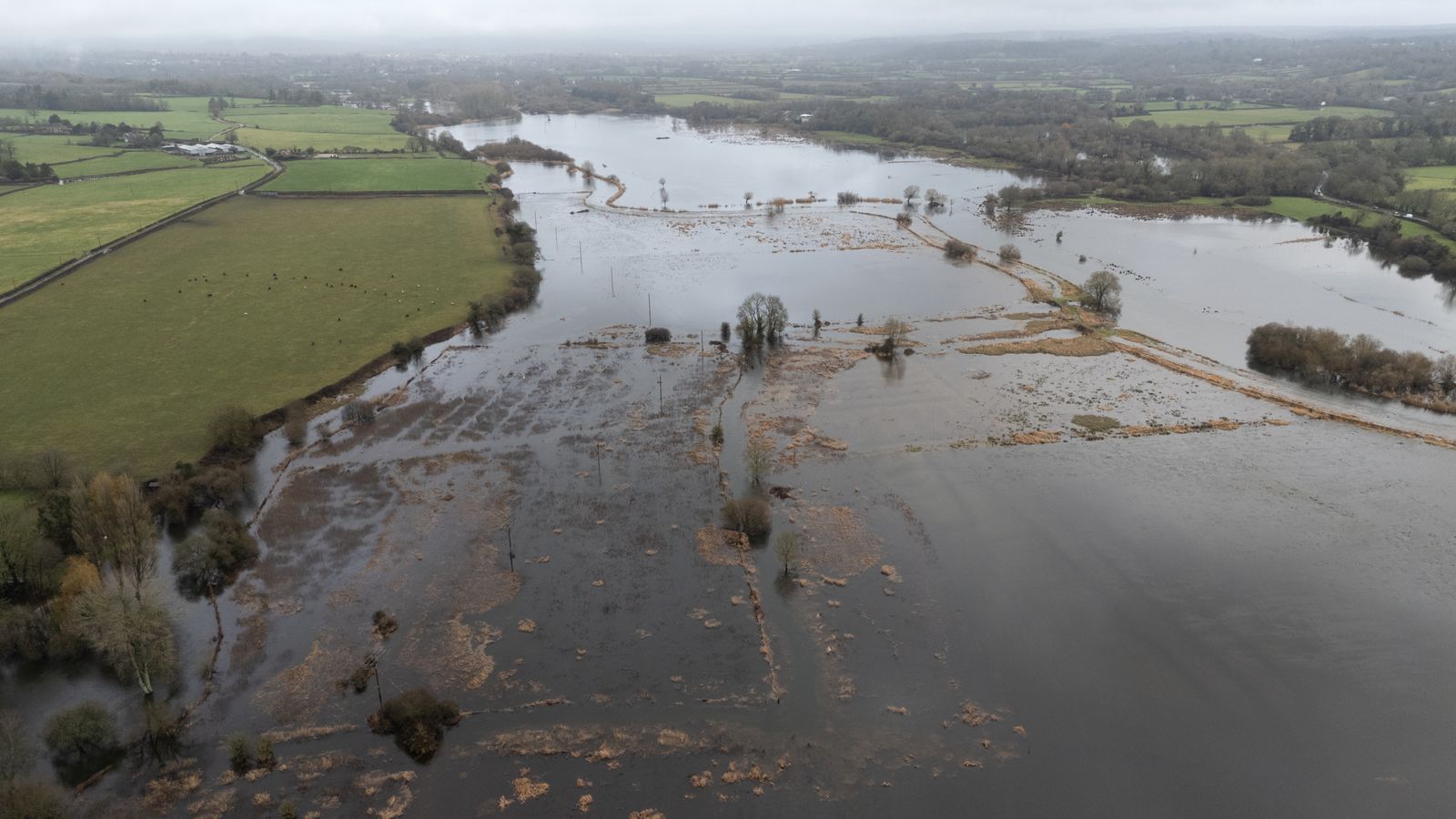
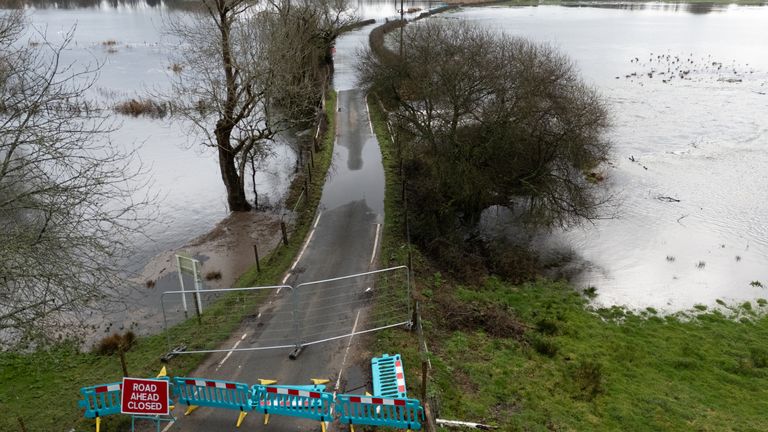
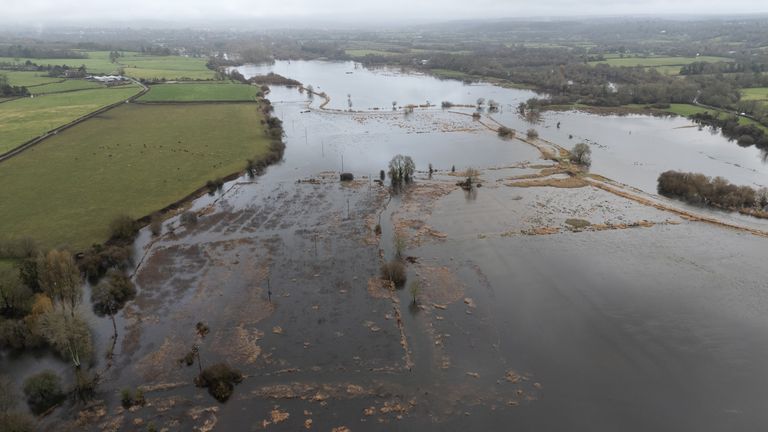
Dozens of flood warnings are in place, along with more than 250 alerts, as relentless rain continues to lash the UK.
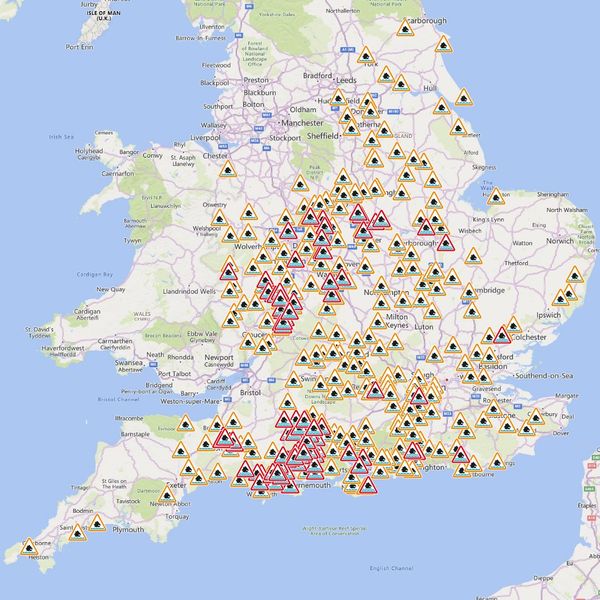
The Environment Agency (EA) has issued 77 warnings for England, meaning flooding is expected, mainly concentrated in the South West and Midlands.
A further 244 flood alerts are in force, meaning flooding is possible, stretching from North Yorkshire to Cornwall, and from the Welsh borders to Norfolk.
Natural Resources Wales has another 11 flood alerts in place across the border. Scotland has one flood warning and five flood alerts.
Check the weather forecast in your area
Warwickshire Fire and Rescue Service also warned that levels in the River Dene had “risen to a state where flooding is imminent”.
The EA usually issues flood warnings 30 minutes to two hours before flooding, according to its website.
• Aberdeen has had zero hours of sunshine since 21 January. It’s the longest sunless period there since 1957.
• Sheffield has had zero hours of sunshine so far this month.
• Katesbridge had its wettest February day on record on 5 February – 67.2mm in 24 hours, beating the previous February site record of 42.2mm in 1985.
• It’s rained every day for the last 37 days in the UK – every day so far this year.
• Several sites across the UK haven’t had an entirely dry day since 30 December, which would mean rain on Sunday would be the 40th consecutive day.
• Exeter Airport has not had a dry day since 31 December.
• The UK as a whole has had below-average sunshine hours for winter so far.
• Rainfall has been quite varied depending on where you live. For example, Eastern Scotland has been very wet, Western Scotland very dry.
It issues them when flooding is expected from rivers, from heavy rains that could cause flash floods, and from high tides and surges coupled with strong winds at sea.
More wet weather is predicted for large parts of the country on Saturday, including blustery showers in the South West and heavy showers in South Wales.
England flood alerts
Scotland flood alerts
Wales flood alerts
NI flood alerts
Sunday offers a more mixed picture, with showers and some sunshine, before wet and windy conditions resume at the start of next week.
Rain has fallen every day of 2026 in the South West and South Wales, the Met Office announced this week.
Both regions have faced 50% more rainfall than usual for January, the forecaster said.
UK floods: ‘No end in sight to the rain’
Meanwhile, the South East received nearly a third of its average February rainfall in just the first three days of the month.
Read more:
When will the rain end? What the Met Office is saying
Migrant crossings hit five-year low in stormy January
So far, February is continuing where January left off – grey and wet. Cornwall had its wettest January on record and other parts of the British Isles weren’t far behind. If you feel the rain has been relentless, you’d be right. Many places, including Exeter Airport, have recorded rainfall every single day this year.
And all that cloud means very little sunshine, adding to the gloomy feel. Aberdeen went nearly two weeks without a glimmer of brightness, and at the moment eastern Scotland has recorded just 1% of their monthly sunshine for February.
In just the first five days of February, the city of Aberdeen has also recorded more than their usual monthly rainfall. And the Isle of Wight isn’t far behind, currently at 97% of their February rainfall and rising. For context, you would expect them to be around 18% at this stage of the month.
So what’s going on? The culprit, as it often the case with our weather, is the jet stream. This fast-moving ribbon of air high in our atmosphere steers areas of low pressure around on the ground.
Instead of flowing nicely from west to east, it’s currently meandering down to the south and this wavy jet has led to blocked weather patterns. Scandinavia is under a large area of high pressure, with settled and largely dry conditions, but we’ve been stuck with low after low, and a dominant southeasterly airflow has sent bands of showery rain northwards across the country.
The jet stream’s southerly position has also meant a lot more rain across southern parts of the UK. It turns out northwest Scotland has been quietly enjoying the best of the dry and bright weather.
When is it going to improve? There will be some drier and brighter spells between the rainbands but the overall unsettled outlook continues right into next month, not good news for those places already struggling.
Until the weather pattern “unblocks”, there is more rain to come. And things could turn colder with a risk of wintry hazards towards the end of next week.
If it’s any consolation, we’re not alone with these exceptional rainfall totals. A succession of storms has battered Iberia, with Storm Marta the latest to affect Portugal, Spain and Gibraltar this weekend, following on a very wet January which saw some places receive three times the normal rainfall.
“Unfortunately, there’s no end in sight,” said Dan Stroud, operational meteorologist with the Met Office.
His colleague Alex Deakin said the trend continued on Friday.
He said: “Friday’s been a very soggy day across a good chunk of the country, cold wind continuing to feed in the cloud and the moisture across north-east England and eastern Scotland.”
Speaking earlier this week, Mr Stroud blamed a “big area of high pressure” for the sustained bleakness.
He said: “Very little in the way of change, and the reason for it really is that we’ve got a big area of high pressure way out to the far north and east of the country, and that’s stopping areas of low pressure from moving through.
“Until that area of high pressure sort of shifts out of the way, we’re not really going to see much of a change in the forecast.
“At the same time, we’ve got the jet stream way to the south, bringing exceptional wet weather to Spain and Portugal.”