Air India flight from Heathrow grounded after ‘possible defect’ with fuel control switch
 by 0
by 0 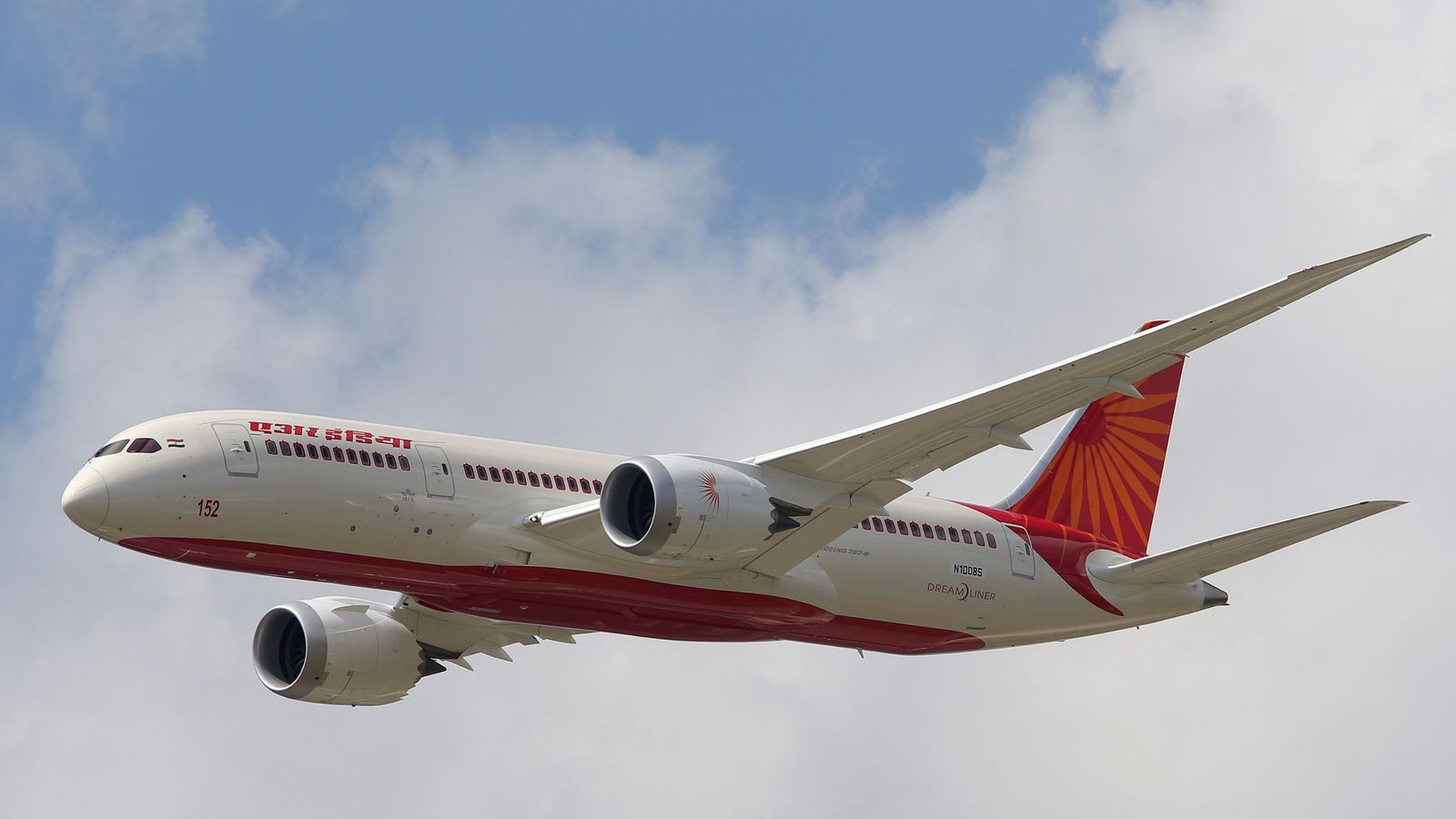
A Boeing 787-8 Dreamliner, operated by Air India, has been grounded after reports of a “possible defect” with a fuel control switch on the same model of aircraft which crashed in Ahmedabad last June.
Air India said it was getting “the pilot’s concerns checked on a priority basis” after the incident reported on the flight – AI132 – from Heathrow to Bengaluru on Monday.
It added the airline had previously examined the fuel control switches on its entire Boeing 787 fleet and “had found no issues”.
In a statement to Sky News, Boeing said: “We are in contact with Air India and are supporting their review of this matter.”
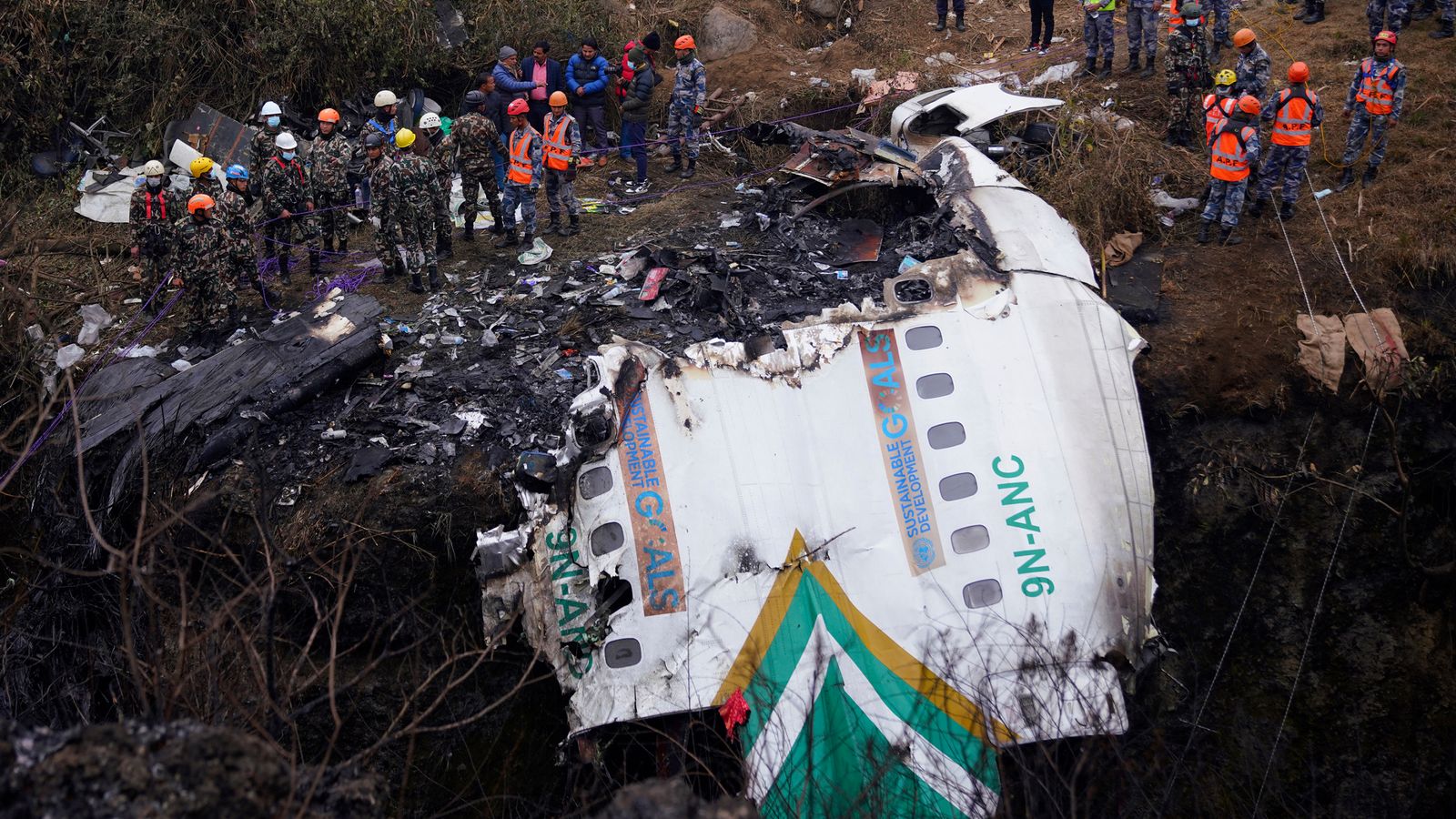
Last June, Air India Flight 171 to Gatwick struck a building shortly after take-off in Ahmedabad, killing 260 people. Briton Viswashkumar Ramesh was the only passenger who walked away from the wreckage.
According to a preliminary report, published by India’s Aircraft Accident Investigation Bureau (AAIB) in July, switches in the cockpit that controlled fuel were moved to a “CUTOFF” position.
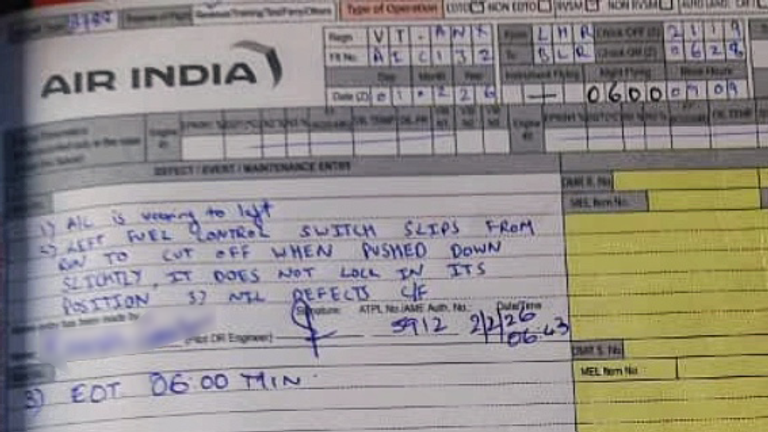
Paperwork has been seen by Sky News, reportedly showing a potential fault with a fuel control switch, which was logged by one of the pilots on Flight 132 after the plane landed early on Tuesday morning.
The entry reads: “LEFT FUEL CONTROL SWITCH SLIPS FROM RUN TO CUT OFF WHEN PUSHED DOWN SLIGHTLY. IT DOES NOT LOCK IN ITS POSITION.”
It is unclear why the crew decided to proceed with the flight if, as reported, the switch failed to remain locked in the “RUN” position and moved towards “CUTOFF” during engine start-up.
Sky News understands this happened on two consecutive attempts during the engine start-up procedure.
A malfunction such as this, under specific conditions, could lead to an inadvertent engine shutdown in flight.
Captain Amit Singh, founder of the aviation safety group Safety Matters Foundation, said: “The incident is especially alarming as it mirrors a known risk previously identified by the US Federal Aviation Administration (FAA).
“In 2018, the FAA issued Safety Alert For Operators SAIB NM-18-33, explicitly warning that certain fuel control switches, including those on Boeing 787s, could malfunction in this exact manner, increasing the risk of accidental engine shutdown.”
A statement from Air India said: “We are aware that one of our pilots has reported a possible defect on the fuel control switch of a Boeing 787-8 aircraft.
“After receiving this initial information, we have grounded the aircraft and are involving the OEM [Original Equipment Manufacturer] to get the pilot’s concerns checked on a priority basis. The matter has been communicated to the aviation regulator, DGCA [Directorate General of Civil Aviation].
“Air India had checked the fuel control switches on all Boeing 787 aircraft in its fleet after a directive from the DGCA and had found no issues. At Air India, the safety of our passengers and crew remains top priority.”
👉Listen to The World with Richard Engel and Yalda Hakim on your podcast app👈
Captain Singh told Sky News: “The fuel switches are relevant to AI171 because it points to a possible hazard: unintended switch movement.
“Investigators can confirm or dismiss this using recorded data, switch inspection and maintenance records. It does not prove the cause, but it’s a sensible line to check.”
In July, Air India said it had “completed precautionary inspections on the locking mechanism of Fuel Control Switch (FCS) on all Boeing 787 and Boeing 737 aircraft in its fleet” and “no issues were found”.
Captain Singh described the most recent report of an apparent fuel control switch issue as “deeply troubling” after the airline’s checks found no issues. “This discrepancy raises urgent questions,” he added.
Read more from Sky News:
Ukraine hits out at ‘infantile’ FIFA boss
Epstein: Mandelson urged to testify
ICE agents issued body-worn cameras
Sumeet Sabharwal was the captain on Flight 171, which crashed in June, and was in charge as the pilot-in-command, while Clive Kunder was the first officer flying the plane.
The initial report from investigators stated that, in an audio recording from the cockpit, one of the pilots is heard asking the other why he “cut off”, an apparent reference to the fuel control switches. The other pilot responds that he did not do so.
The 15-page report did not identify which comments were made by the flight’s captain and which were made by the first officer.