Rafah border crossing reopening is symbolic, even if numbers entering and exiting Gaza are low
 by 0
by 0 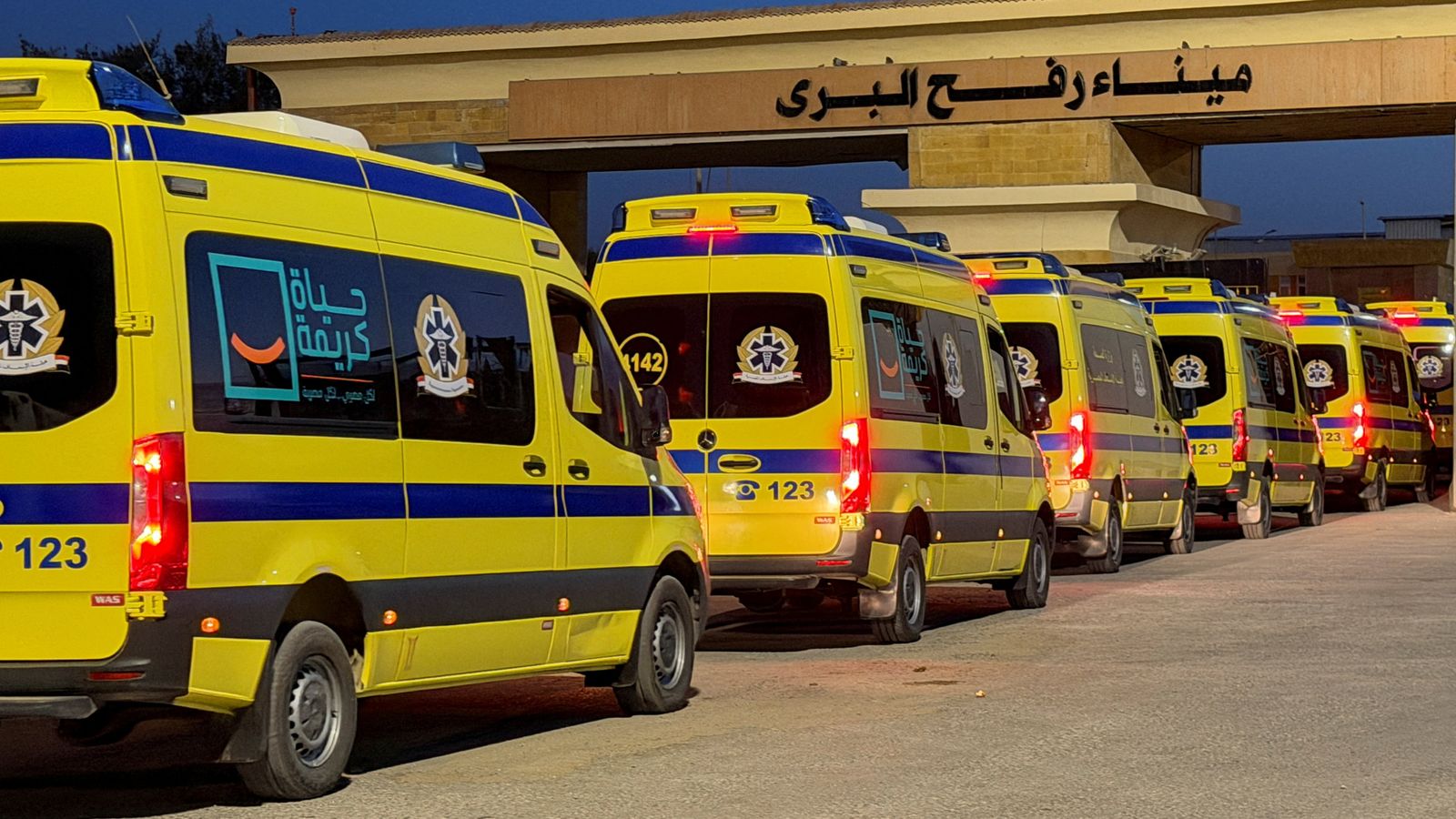 by 0
by 0 
It took the best part of a day of waiting around before Gaza’s Rafah border crossing with Egypt reopened for limited traffic.
Ambulances had gathered on the Egyptian side, waiting for casualties to arrive. But it was only as the sun was falling that they were brought into use.
A very small group of people, all with serious medical conditions, had been brought from Khan Younis, along with two travelling companions.
They were checked and then gently loaded into the medical vehicles, ready for transfer to a hospital where their complex needs could be addressed with a skill that is simply not available in the ruins of Gaza.
The Rafah crossing is a unique artery for Gazans, as it is he only way you can leave the Strip and not end up in Israel.
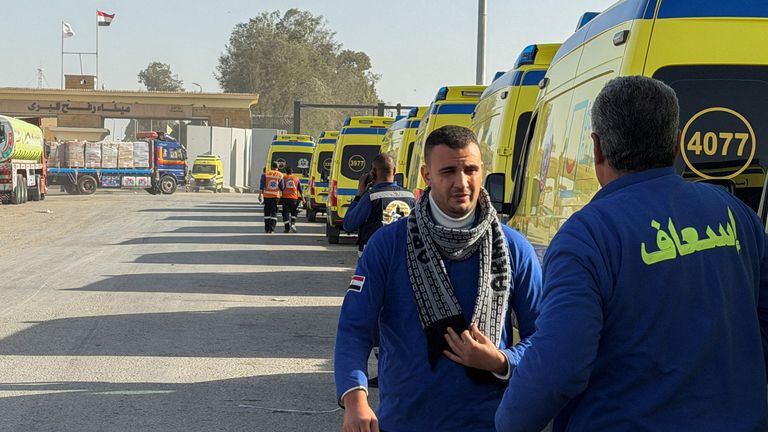
That’s why it’s so important, and that’s why this opening is so important and so symbolic, even if the numbers are low.
The number of people being allowed to enter and exit is very small, and the restrictions are tight.
Read more from Sky News:
China executes four people over scam and gambling syndicate
Bangladesh sentences former PM and her Labour MP niece to jail
Already on this, the first day, it had become obvious that Israel was rejecting many of the applications lodged by doctors in Gaza.
The director of the Nasser Medical Complex said that his team had put forward the names of 27 patients, but only five had been given approval to cross.
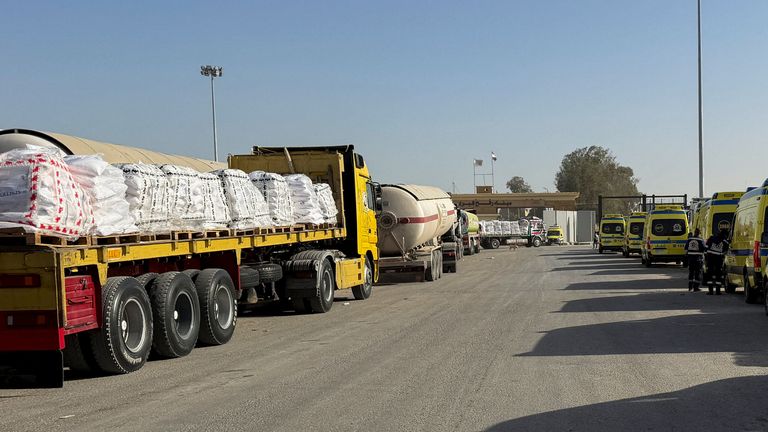
So far, Israeli authorities have not offered any explanation for this, but it is clear they are carrying out prolonged security checks on each person who asks for permission to use the crossing. This process was always likely to be protracted.
There are, clearly, many thousands of people who need medical treatment that is simply not possible in the ruined infrastructure of Gaza. Similarly, there are many people keen to return to their homes.
The numbers will surely rise, but even if we get to the point when, as expected, 150 are leaving and 50 are returning, it will still be a drop in the ocean.
But it is a form of progress. And, as Egyptian ambulances took their Gazan patients to hospital, there will be many who welcome that.