‘There is no food in this community – it is hard’: Flooding brings devastation and disease to thousands in Mozambique
 by 0
by 0 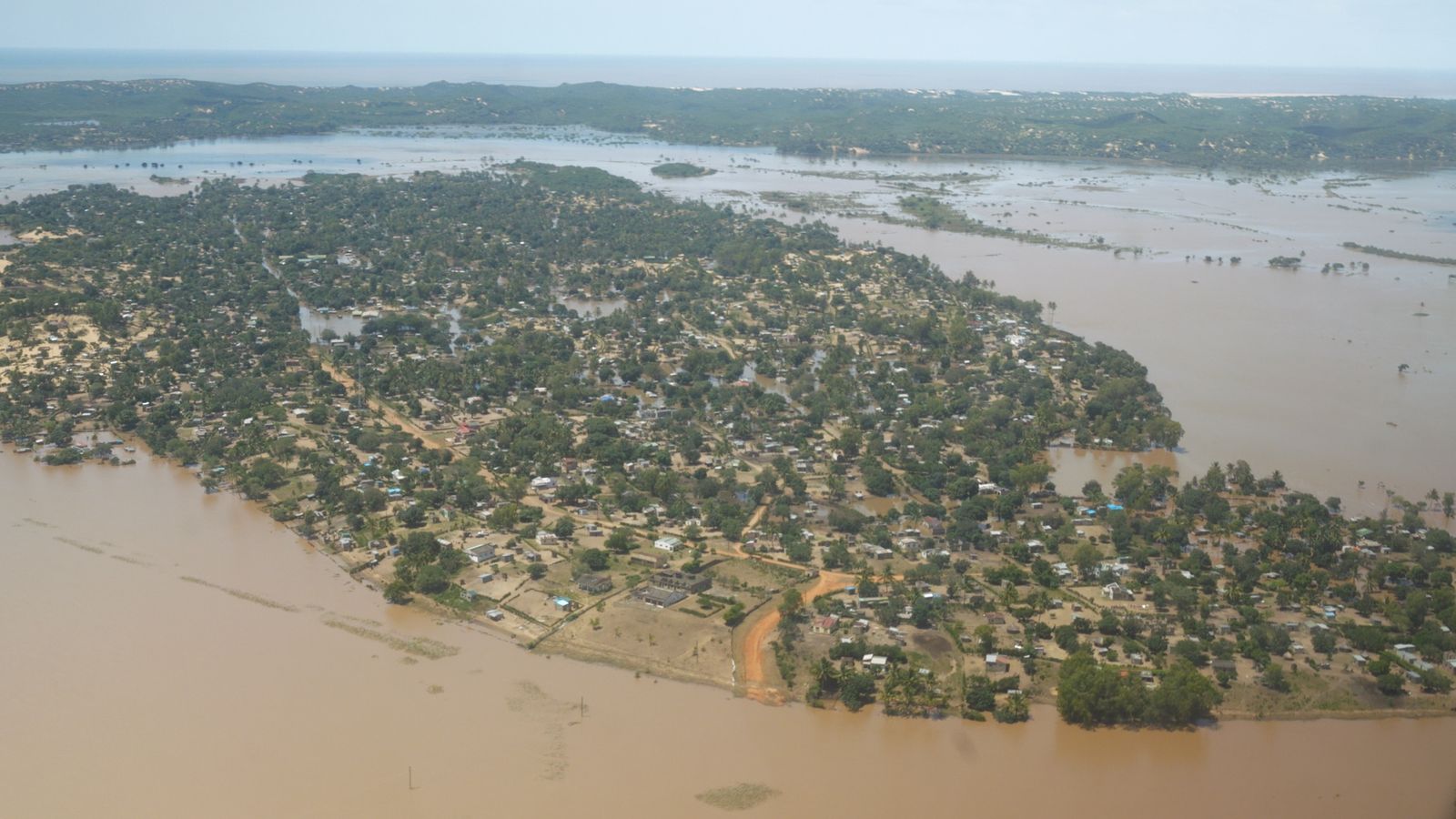 by 0
by 0 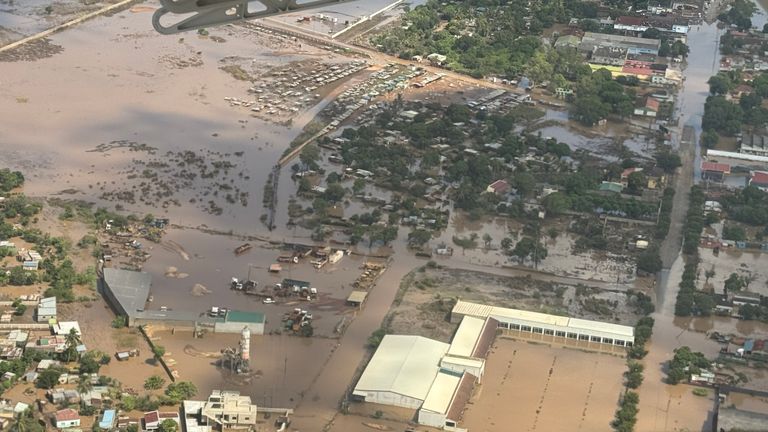
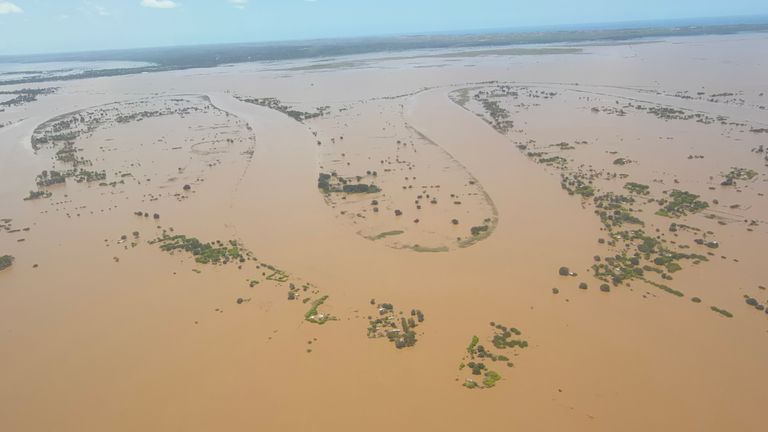
The broken banks of the Limpopo River are now faint snaking lines in a vast sea of brown, stagnant water that stretches out in every direction.
Our view, from a Mercy Air helicopter delivering food aid to starving communities surrounded by submerged farms in southern Mozambique‘s Gaza province, is devastating.
“This island is too big to be evacuated. But all their rice fields and food is from outside, where it is flooded,” our pilot, Samuel Lips, tells us as we fly into Mexinguine.
Mexinguine is not a natural island but one created by climate change.
The roads connecting it to the rest of the country have disappeared, and its population is now squeezed into the pockets of higher ground that remain above water.
“That is a soccer field. Right next to it, completely submerged, is the hospital,” says Sam, as he gears up to land on a narrow patch of dry land near a makeshift clinic.
The sound of the helicopter is a welcome disruption. The elderly, teenagers and children gather around to receive the buckets of basic sustenance before we even hit the ground.
‘We need food’
In the distance, lines of people eagerly traverse the neighbourhoods turned marshes to join the growing crowd.
“We need food. We, as responders, need food to distribute. We need water. We need shelter because there is no privacy for people. We need medicine,” nurse Luis Mauricio tells us in front of the two-room clinic serving the suffering population.
Luis is surrounded by patients complaining of symptoms of infectious diseases, worsened by the swamp-like conditions. As the water begins to recede, the problems are growing.
“We are alive, but the floods are troubling us. We are coughing, we don’t have a place to live, we don’t have food, we don’t have water – the water we are drinking is contaminated because of these floods,” says one of his patients, Raqualina Tamele.
“We have received children from ages zero to 17 with different diseases,” Luis adds, surrounded by nursing mothers and children.
“Now, we are having a lot of diarrhoea, vomiting and some cases of malaria. It has been persistent.
“There are a lot of people, and they are sick. There is no food in this community – it is hard.”
Charities face daunting task
Aid workers are scrambling to access cut-off areas to provide much-needed support, but are facing a mammoth task.
At least 400,000 people have been affected in Gaza province alone, and an area roughly the size of Cyprus – 10,000 square kilometres – is covered by floodwater.
“Climate change is really impacting a lot on the weather, and we are really feeling it. Being near the sea with a lot of surrounding countries makes our situation even worse,” says Gaspar Sitefane, the country director for Water Aid in Mozambique, in Marracuene – a flood-hit district of Maputo province submerged by the Inkomati River.
“Whatever rains come to South Africa to Zimbabwe to Eswatini to Malawi, the water then comes through Mozambique to reach the sea, and when it comes it takes almost everything – people, our animals, our farms – almost everything.”
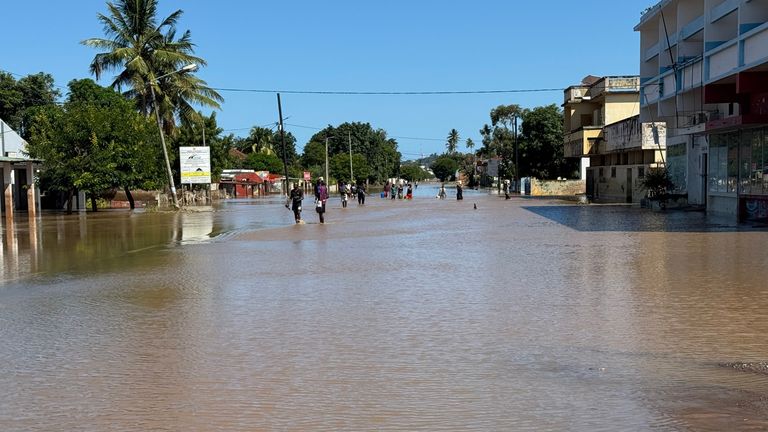
Gaspar’s own family home has been flooded. He tells us there are few Mozambicans who have not been touched by this tragedy.
We meet Gaspar at a school-turned-shelter, which is housing hundreds of evacuees who have lost everything.
The Mozambican government has postponed the start of the 2026 school year by nearly a month. The floods have affected 431 schools, with 80 currently used as shelter centres and 218 cut off. Some 420,000 students remain affected nationwide.
Read more from Sky News:
Colombia plane crash kills 15
China executes 11 members of mafia family
At the Gwazamutini shelter, children are lining up to try on clothes donated by teachers. This school is now home to over 300 children, who are likely to be joined by more as new evacuees arrive in the region.
“The people of the area say that 1977 is the last time we had floods like this,” says Shafi Sadat, the mayor of Marracuene, who has spent days rescuing thousands of people from the floodwaters with the support of his friends and constituents.
He adds: “We got 3,228 people out, and now we have to feed them – in the morning, afternoon and night.
“There is a lot of damage – in agriculture we’ve lost everything. We don’t have anything. These people live with agriculture.”