South East Water action group demands boss’s immediate removal
 by 0
by 0 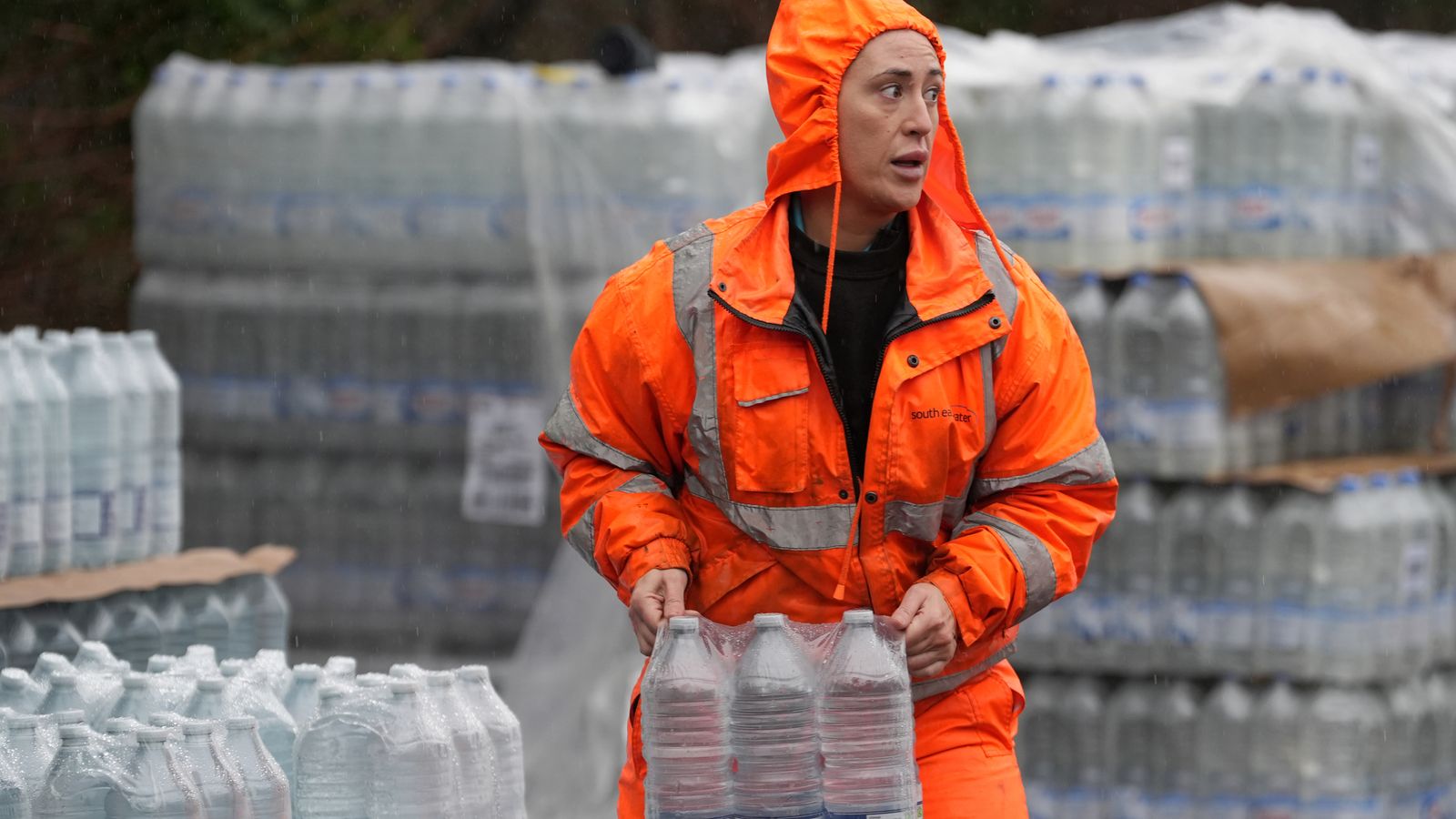
A community action group in Tunbridge Wells is demanding the “immediate” sacking of South East Water’s chief executive after weeks of outages which have left tens of thousands of customers without water.
Sky News has seen a letter from Dry Wells Action, which was formed by residents and businesses in the Kent town, to Chris Train, South East Water‘s chairman, demanding answers about the company’s solvency, infrastructure spending and refusal to engage with stakeholders during the biggest crisis in its history.
“You have comprehensively lost the trust of Tunbridge Wells customers,” the letter, sent on Monday morning, said.
“Only by providing us with answers and by sacking your CEO [David Hinton] can you even begin to restore public confidence.”
Money latest: Criminal barrister talks about ‘painfully low’ salaries
The letter underlines the rising tide of public anger about the privately owned company’s performance in recent months, which has led to doctors’ clinics being cancelled, school closures and businesses facing substantial financial losses.
Dry Wells Action’s committee’s letter, which follows its first public meeting, held last week, lambasts Mr Train for the absence of meaningful communication during the crisis.
“We note that the reason given for not attending our public meeting was that you are subject to regulatory investigation (as you have been since 2023, however), and that you have informed the Council that it is “too early” to give answers,” the committee wrote.
“This refusal to submit to public scrutiny, along with the persistent evasion of the national media by your chief executive, demonstrates an appalling lack of accountability by your failing organisation.”
It added that South East Water would also not attend a Borough Council committee meeting scheduled for Monday evening, further deepening public mistrust of the company.
Mr Hinton, who has faced swingeing criticism over his performance and remuneration, was paid more than £450,000 last year.
Following an appearance in front of a parliamentary select committee this month, several MPs called on him tor resign, while Emma Reynolds, the environment secretary, has urged the water regulator to review the company’s operating licence.
South East Water, like many of the other privatised water utilities, has seen its balance sheet loaded with debt while shareholders have received hundreds of millions of pounds in dividend payments.
In Dry Wells Action’s letter, the group accused Mr Train and Mr Hinton of “appear[ing] to have presided over an unprecedented deterioration in the solvency of the company, with the result that your shareholders last year had to inject £200m in new equity to reduce borrowings”.
“Over the last 10 financial years, the board of SEW has voted to pay £249m in dividends to your shareholders, whilst the profitability of the company has collapsed and your debt has risen from £943m to £1.33bn.”
It was, the group said, a “sorry tale of financial mismanagement, poor leadership, and underinvestment in infrastructure”.
The crisis at South East Water comes ahead of a shake-up of the water industry’s regulation, with Ofwat due to be scrapped and replaced by a new watchdog.
A white paper published by ministers this month pledged to overhaul the industry amid growing public and political anger exacerbated by the financial travails of Thames Water, which is fighting to avoid temporary nationalisation.
Dry Wells Action’s letter to South East Water demanded answers to questions within five working days about its financial resilience, including how it intends to repay a £120m revolving credit facility by June while maintaining the confidence of its lenders.
“Is your company still solvent or should it go into administration to reduce its debt? With the scale of your interest costs, how do you believe you are able to generate sufficient profit to invest in improving the supply to our town without substantial further increases in customer bills?,” the group said.
It also accused the company of “woeful communication with customers, which to date is principally via short text messages, often with false promises, inaccurate information and no means of engagement”.
The letter urged Mr Train to review the level of compensation due to be paid to businesses affected by the outages, saying the proposed sums were inadequate.
The letter was copied to other stakeholders, including government ministers, Ofwat and NatWest Group, whose pension fund is a 25% shareholder in South East Water.
The bank itself is not involved in the management of the stake.
South East Water has been contacted for comment.