Baseball Hall of Fame 2026 results: Winners and losers
 by 0
by 0 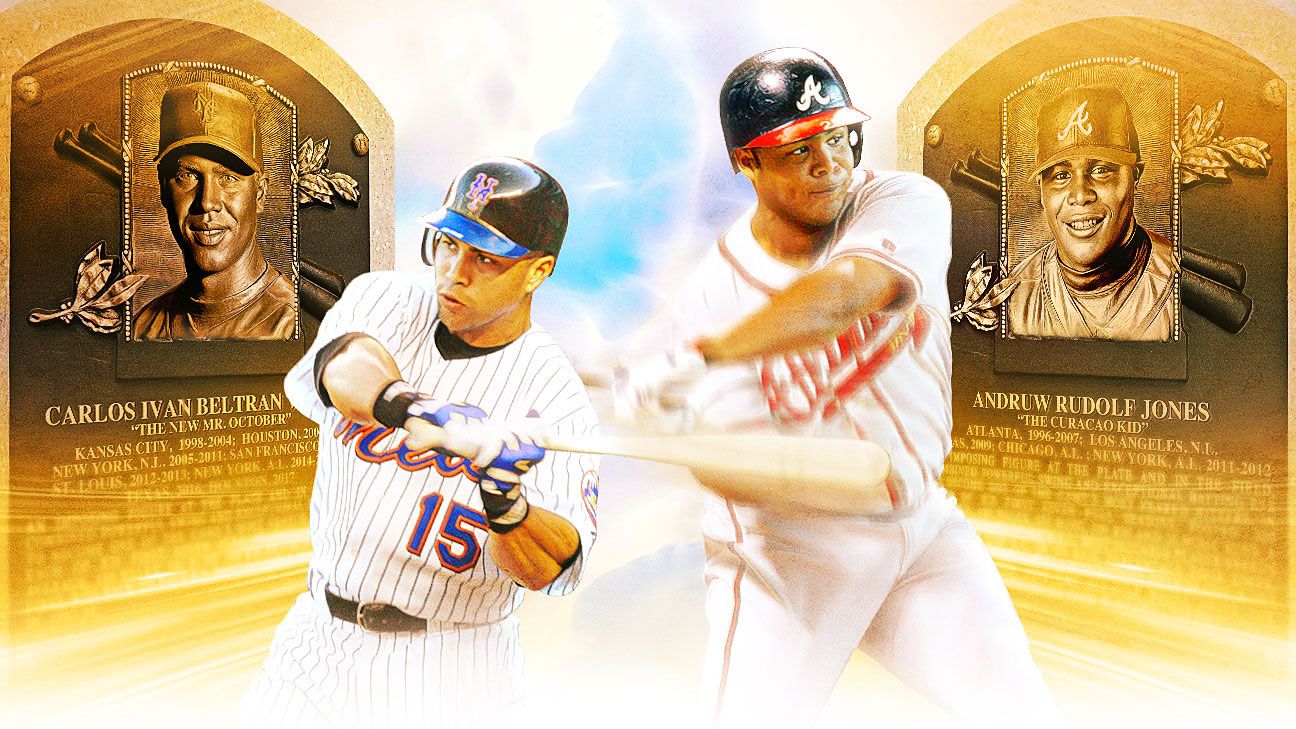
The results are in! Carlos Beltran and Andruw Jones are the newest members of the Baseball Hall of Fame.
The Baseball Writers’ Association of America elected the pair to Cooperstown’s Class of 2026 with 84.2% and 78.4% of the vote, respectively. They join Jeff Kent, who was elected by the contemporary baseball era committee in December.
ESPN MLB experts Buster Olney, Bradford Doolittle, Jesse Rogers and Jorge Castillo break down what the 2026 election tells us and look ahead to the 2027 ballot and beyond.
Olney: Last year, Felix Hernandez polled at 20.6% of the vote in his first year on the ballot, and this year, he took a major step forward, to 46.1%, in what now appears to be a steady march toward election. There was a time when King Felix was in the conversation for best pitcher on the planet, winning the AL Cy Young Award in 2010, and it seems that his lack of gaudy accumulation stats — he finished his career with 169 victories and 2,524 strikeouts — are something voters will accept.
Rogers: Chase Utley is headed in the right direction. His third time on the ballot produced enough of a leap — from 39.8% to 59.1% — to believe he’ll get in sooner than later. His increase is similar to what Jones and Beltran experienced before they were elected. Add on the fact that Utley finished with the highest percentage of votes among those who did not get in this year — meaning he could be next up. With seven years remaining on the ballot, he’s now on track to be a Hall of Famer.
Castillo: Felix Hernandez and every other elite modern starting pitcher with dominant peaks lacking the historic prerequisites centered on counting stats for enshrinement. Not only does his jump this year suggest he’ll eventually reach 75%, but that he’ll reach that number sooner than previously expected after a career that concluded with a 3.42 ERA across 2,279⅔ innings. That’s a victory for him and other future starting pitchers who didn’t compile the huge counting stats of yesteryear’s top starting pitchers.
Doolittle: King Felix. I’ve been troubled by what I see as a potential underrepresentation for modern-day starters in the Hall. (A lot more on that coming Thursday.) The jump in support for Hernandez is really encouraging. His career is almost certainly going to look more like the typical Hall of Fame starter in the future than those of Justin Verlander, Max Scherzer and Clayton Kershaw. If the bar is set at that latter trio, we’re not going to have enough starters in Cooperstown. That said, Hernandez still has a ways to go.
Olney: The Hall of Fame is, because the lines over the steroid era have fully hardened in the voting processes. There was a time when some writers and nonvoting pundits hypothesized that the perspective on PED use would loosen over time. The theory was that younger voters would be more accepting of the idea that the business of baseball effectively fostered PED use by looking the other way, and would stop penalizing a small handful of players for the sins of a generation. But that has not been the case. Manny Ramirez and Alex Rodriguez have not moved in their vote percentages, just as Roger Clemens and Barry Bonds and Sammy Sosa and Mark McGwire, et al., did not progress. The Hall of Fame should be the model for providing greater understanding of the PED use, and instead, it has aimed to punish a few without acknowledging there are almost certainly current HOFers who made the same choices.
Rogers: By definition, Manny Ramirez lost the most this cycle, as it was his last time on the ballot. He didn’t come close to making it. As Buster writes, HOF voters have been pretty consistent when it comes to known PED users: If you were caught and punished, you’re not getting in. Ramirez earned 38.8% of the vote, again showing that there is a voting bloc of around one-third or a little more who are willing to overlook players who broke PED rules — but it’s simply not enough to get them elected.
Castillo: Five years ago, Omar Vizquel appeared on his way to Cooperstown. The former shortstop was on 49.1% of the ballots in 2021, sandwiched between Scott Rolen, Billy Wagner and Todd Helton — all of whom have been inducted since. But Vizquel probably won’t join them after earning just 18.4% of the vote this year. Vizquel’s chances took a nosedive when he was accused of domestic abuse by his ex-wife in December 2020 and was sued by a former bat boy over alleged sexual harassment. His credentials were hotly debated before the allegations — he was a defensive wizard with 11 Gold Gloves and 2,877 career hits, but just a .688 OPS and 82 OPS+ over his 24-year career — and it seems they won’t be strong enough to withstand them.
Doolittle: It’s just the PED-associated guys in general. Manny Ramirez picked up little additional support but now his BBWAA eligibility is up. A-Rod’s percentage increased by less than 3%. And Ryan Braun falls off the ballot after one year, failing to reach the 5% level of support needed. On the flip side, Andy Pettitte added more than 20% to his support. I’m not sure any of it makes sense to me. Actually, I am sure: It doesn’t.
Olney: Utley’s vote percentage of 59.1% reflects a shift in how the voters are thinking, away from relying on statistical accumulations — remember when 500 homers, 3,000 hits and 300 wins were important benchmarks? — and toward rewarding players for peak performance. There was a time in Utley’s career when he was among the very best players. This bodes well for the likes of Buster Posey in the future.
Rogers: The leap Felix Hernandez made is a reminder that we are about to enter a new era of starting pitching criteria. Wins are just not going to be a thing moving forward, considering Hernandez had only 169 career victories yet earned 46.1% of the vote in only his second year on the ballot. And that’s without ever appearing in a postseason game. Even Andy Pettitte — who won 256 games — jumped in voting. It bodes well for future candidates, including Jon Lester, who will appear on the ballot next year.
Castillo: Players disciplined for PED use aren’t getting elected any time soon. Alex Rodriguez faces a steep climb to induction after five years on the ballot, and Manny Ramirez’s candidacy ended with a whimper. Ramirez jumped just 4.5% in his final year on the ballot, falling about halfway to the finish line.
Doolittle: Chase Utley’s climb continues and it now seems certain that he’ll be elected. I’m on board with that. But I don’t get how he has such a large edge in support over contemporary middle infielders such as Jimmy Rollins and Dustin Pedroia.
Olney: Cole Hamels kicks off his years of candidacy with a solid 23.8% — more than Felix Hernandez last year — and this is a strong indication that Hamels will eventually earn induction. Hamels did not finish in the top three for the Cy Young Award in any year of his career, but he was unquestionably a leader on the Phillies’ staff. His career numbers are actually similar to those of Hernandez.
Rogers: Cole Hamels had a nice debut. His numbers are nearly identical to Hernandez who received double the vote. It bodes well for the future but doesn’t guarantee Hamels will get in — simply that he’s likely to get into the 40% range perhaps as soon as next year.
Castillo: Andy Pettitte, who admitted to using HGH twice in his career but claimed it was for injury recovery and not to improve on-field performance, has some real momentum with two years left of eligibility. The left-hander leaped from 27.9% to 48.5% in his eighth year on the ballot — behind only Beltran, Jones and Utley, and ahead of PED users Alex Rodriguez and Manny Ramirez.
Doolittle: It’s definitely Pettitte. I get that he displayed accountability for his PED use and he deserves credit for that. I’d put him in either way. But I don’t see why use is such a red line for some players, but not others. And what has changed so much since last year?
Olney: Two candidates who should be slam-dunk choices will appear on the ballot over the next two years — Buster Posey, the backbone of the San Francisco Giants’ dynasty, will head the 2027 class of Hall of Famers, and 2028 will be the year of Albert Pujols, one of history’s all-time great hitters. Utley will get in next year, as well, after his strong showing the first time on the ballot.
Rogers: Of the returning players on the ballot, I think Utley is the only sure lock over the next two years. Several newcomers over the next couple of ballots will dominate the vote, which could depress vote totals for others, even though a vote for one doesn’t mean a vote against another. But writers tend to focus on the sure things first — which means Utley will get in, but others might have to wait.
Castillo: Buster Posey next year and Albert Pujols in 2028 are first-ballot locks. Chase Utley and Felix Hernandez could join them.
Doolittle: Utley could get over the top as soon as next year, especially since the first-timers beyond Posey don’t seem likely to draw much support. Hernandez’s momentum should continue to get him by 2028. And that year, Pujols is (hopefully) going to be a unanimous selection. Or at least he should be.