NHL trade grades: Report cards for biggest deals of 2025-26
 by 0
by 0 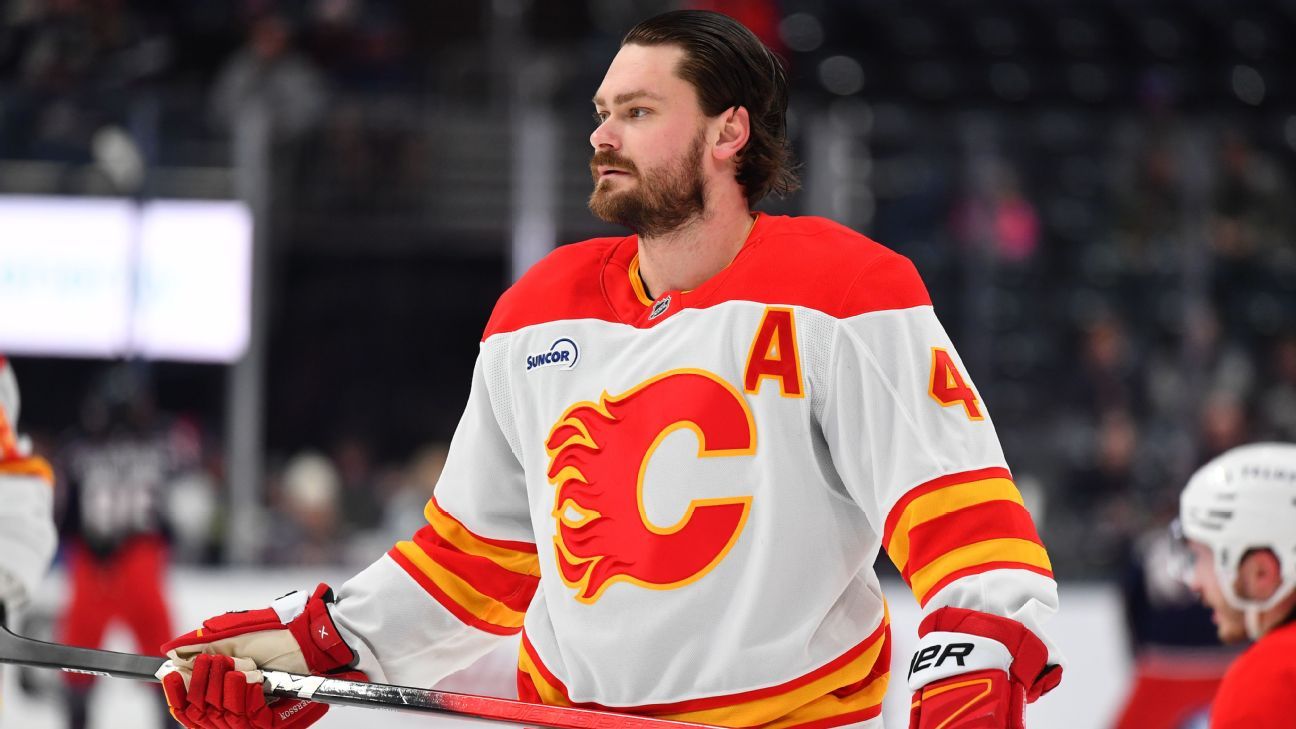

The 2025-26 NHL trade season is off to a wild start. That continued Sunday, as the Calgary Flames traded defenseman Rasmus Andersson to the Vegas Golden Knights for a package that included defenseman Zach Whitecloud, draft picks and a prospect. The Flames are retaining 50% of Andersson’s salary.
Previously, the Vancouver Canucks traded Quinn Hughes to the Minnesota Wild, in exchange for Zeev Buium, Marco Rossi, Liam Ohgren and a 2026 first-round pick. Earlier, the Pittsburgh Penguins sent goaltender Tristan Jarry and forward Sam Poulin to the Edmonton Oilers in exchange for goaltender Stuart Skinner, defenseman Brett Kulak and a 2029 second-round pick.
Throughout the season up until the March 6 deadline, ESPN reporters will be grading each side on all of the big swaps, with the latest deals highest up on this page.
Read on for more, and keep this page bookmarked as the trade volume rises throughout the season.
Jump ahead: Andersson to VGK
Hughes to MIN
Jarry to EDM

Trading for a top-pairing defenseman from the Calgary Flames is something the Vegas Golden Knights have done before, landing Noah Hanifin in 2024.
They did it again Sunday, acquiring Rasmus Andersson in a deal with the Flames in exchange for defenseman Zach Whitecloud, a 2027 first-round pick, a 2027 second-round pick that becomes a first-round pick if Vegas wins the Stanley Cup, and prospect defenseman Abram Wiebe. The Flames are retaining 50% of Andersson’s salary, and his contract expires after this season.
Let’s take a look at how each front office performed in the NHL’s latest trade.

This trade had quite a few angles. It starts with why the Golden Knights felt it was necessary to trade for the most sought-after defenseman weeks before the Olympic break.
Vegas is without Alex Pietrangelo for what could be the rest of the season, if not his career, which forced the Golden Knights to navigate the first half of the season without a proven, top-four right-handed defenseman who can be trusted to play in every situation.
Their underlying metrics show that their defensive structure was finding success. They entered Sunday giving up the fewest shots against per 60 minutes, the second fewest high-danger chances allowed per 60, and the ninth fewest scoring chances allowed per 60.
It’s one of the major reasons they enter this week sitting atop the Pacific Division standings, with the eighth-most points in the NHL.
The disconnect has been with their goaltending throughout most of the season. The Golden Knights have a .884 team save percentage in all situations, tied for the third-lowest percentage in the NHL.
Maybe more could have been done in net — with the idea that there’s still time ahead of the March 6 deadline. Alternatively, they might believe they have the answer in Akira Schmid, considering he has 15 wins, a 2.45 goals-against average and a 2.90 goals saved above average that is 26th among the 56 goalies with more than 700 minutes played.
But there’s another question: Is there such thing as a team being too good on defense? Especially when there has been a need to find more consistency in net?
That presents another reality within all the angles of this deal: the Golden Knights’ presumed second defense pairing is good enough to be a top pairing elsewhere.
Adding Andersson to the mix means they’ll likely reunite him with his former Flames defense partner in Noah Hanifin. Andersson and Hanifin were the Flames’ top defense pairing for two-plus seasons before the latter was traded to the Golden Knights during the 2023-24 season.
Using that duo did more than just give the Flames a trusted top partnership. It gave them two defenseman who could each score more than 10 goals, facilitate the puck, and be trusted to play in every possible situation.
But the trade does raise at least some concern about risk.
Sportsnet reported that the Boston Bruins removed themselves from the Andersson race because there was no extension as part of the deal, with the idea that the Golden Knights believed they could eventually get a new deal done at some point before this summer.
ESPN’s Emily Kaplan reported Sunday that Andersson, who is in the final year of his current contract, made it known that Vegas was his preferred destination. If so, it creates an expectation that he and the Golden Knights will eventually find common ground on a new deal.
It’s a similar situation the Golden Knights had a few years ago with, you guessed it, Hanifin before he signed an eight-year contract extension worth $7.35 million annually.
Let’s say Anderson does end up signing an extension. This trade would become another one that lands the Golden Knights front office an “A” grade in their win-at-all-costs pursuit for the second title in franchise history

It’s becoming an all-too familiar script for the Flames over the past five or so years: moving on from some of their best players with the mission of finding a deal that helps the franchise in the short and long term.
With Andersson entering the final months of his contract, it was the latest example of that dynamic. What further reinforced the reality of the second part is that the Flames came into Sunday as one of five Western Conference teams within seven points of the final wild-card spot.
So, finding a return for Andersson that could help them now and in the future was crucial. It appears that this particular trade could help them accomplish that mission.
Whitecloud helps them now, in that they get a proven right-shot, top-four Stanley Cup winner who can play heavy minutes. He has two years left on his contract after this season, worth $2.75 million annually. It’s the sort of contract that allows the Flames to explore a few options.
The first is that they keep him given his experience and contract value for a team that now has $8.545 million in salary cap space, per PuckPedia. The second is they could seek to trade him either this season or in the future to a contender in need of defensive help; again, he provides extensive Stanley Cup playoff experience at a team-friendly price.
Another detail that has proved important for the Flames and other teams in their situations is draft capital. That’s why it was so crucial for them to get a first-round pick when they traded Hanifin. That’s what also made it necessary to do the same for any team that wanted Andersson.
Now they have two first-round picks in 2026 and again in 2027, with both of those extra first-rounders coming by way of the Golden Knights. (And potentially another one down the road if Vegas wins the Cup.)
Wiebe was a seventh-round pick in 2022 who is currently in his third year at the University of North Dakota. The 6-foot-3 Wiebe has three goals and 14 points in 24 games for UND. He becomes added defensive depth for the Flames’ system.
Everything was quiet Friday … until it wasn’t. Because that’s when the first blockbuster trade of the season happened, with an expected name going to an unexpected place.
The Vancouver Canucks traded captain and star defenseman Quinn Hughes to the Minnesota Wild with defenseman Zeev Buium, forward Liam Ohgren, forward Marco Rossi and a 2026 first-round pick going in the other direction.
How did both general managers perform in what is easily the biggest trade of the season to this stage?
1:47
Why Quinn Hughes’ trade to Wild puts rest of NHL on notice
Greg Wyshynski breaks down why he loves the trade of Quinn Hughes to the Minnesota Wild.

In recent years, the Wild built one of the best farm systems in the NHL. Investing in their system and in player development gave them options … and they used three of those options to land one of the NHL’s best defensemen.
Hughes gives the Wild a Norris Trophy winner who can be used in every situation, starting with the offensive zone. Finding ways to consistently score goals has been a challenge for the Wild over the past few seasons.
Not that Hughes can single-handedly solve for that one problem. But he can definitely help, considering he has had four straight seasons of more than 60 assists and is projected to finish with 56 having missed a portion of this season with an injury.
How crucial is that for the Wild? Hughes’ 60 assists alone would have been tied for second on the team in points last season. His 76 total points also would have led the Wild outright in that category. The 21 assists that he has this season would already be the most if he played the whole season for the Wild, and his 23 points are tied for the third most on the roster.
Hughes also provides the Wild with another option — in addition to Brock Faber — who can be trusted to play in every key situation for long periods. The Wild could even pair them together if needed to form a combination that can defend and then quickly break out into transition.
The Wild’s top-four defensive unit also features Jonas Brodin, Jared Spurgeon and Faber, while Jake Middleton is logging more than 18 minutes per game.
Of course, adding Hughes came with a premium package going the other way. Buium was in his first full NHL season, having been a first-round pick in 2024. Ohgren was a first-round pick in 2022, and Rossi was a first-round pick in 2020.
The thought was that Buium would be part of the long-term plan, whereas Ohgren was a bit more of a work in progress given he had spent part of the season in the AHL. Rossi re-signed with the Wild having just spent the 2024-25 season and the early portion of the offseason as a possible trade target before agreeing to that new deal.
But there was also the matter of where those three fit into the Wild’s current lineup. Buium was on the third pairing, with the idea that he could be elevated into the top four at some point. Ohgren was playing amid the Wild’s injury crisis — Rossi and others had been on IR this season — but has zero points in 18 games.
Parlaying a sizable part of their future to get Hughes signals that the Wild are intent on breaking into that collection of teams that are in a championship window. Two of them — the Colorado Avalanche and the Dallas Stars — are ahead of the Wild in the Central Division standings right now.
Hughes has one more year left on his current contract at $7.85 million before hitting free agency in the summer of 2027, but he can sign an extension as of July 1, 2026. Whatever happens between now and then could play a role in defining one of the biggest trades in Wild franchise history.

Going from being a game away from the Western Conference finals in 2024 to potentially winning the lottery over a two-year period prompted some difficult questions in Vancouver.
Figuring out whether the franchise needed to move on from Hughes might have been the most difficult.
Speculation about Hughes’ future ramped up significantly this offseason, when team president Jim Rutherford said that Hughes wanted to play with his brothers, Jack and Luke, who are on the New Jersey Devils.
Eventually, the Canucks were playing out two hypotheticals: one in which they kept Hughes, attempted to turn things around but ran the risk of losing him in free agency with nothing in return at the end of the 2026-27 season, and another in which they moved on from him at some point, commanding the sort of trade package that could help them now and in the future.
They went with the second option, which has a chance to potentially start paying dividends now for a franchise that entered Friday with the worst record in the NHL — but that is also the owner of two first-round picks in this summer’s draft.
Buium projects as a top-pairing, puck-moving defenseman who could be used in various situations. He joins a top four that includes Filip Hronek, Marcus Pettersson and Tyler Myers. He gives the Canucks another young defenseman for the future, in a young group that also includes Elias N. Pettersson and Tom Willander. He’s in the second year of his entry-level contract and will become a restricted free agent at the end of the 2026-27 season.
Ohgren is a potential top-nine option who has shown promise with what he has done at the AHL level. By skating more minutes with the Canucks, he could possibly find offensive consistency. He has two years remaining before becoming an RFA.
Rossi has a chance to establish himself as the Canucks’ second-line center upon his return from injury. Trading J.T. Miller last season created a void that was slated to be filled by a player who came over in that deal, Filip Chytil. Chytil had three goals through six games before sustaining an upper-body injury that has kept him out of the lineup since Oct. 19.
Rossi, who is in the first year of a three-year bridge deal, could return as soon as Sunday to provide the Canucks with another top-six option down the middle.
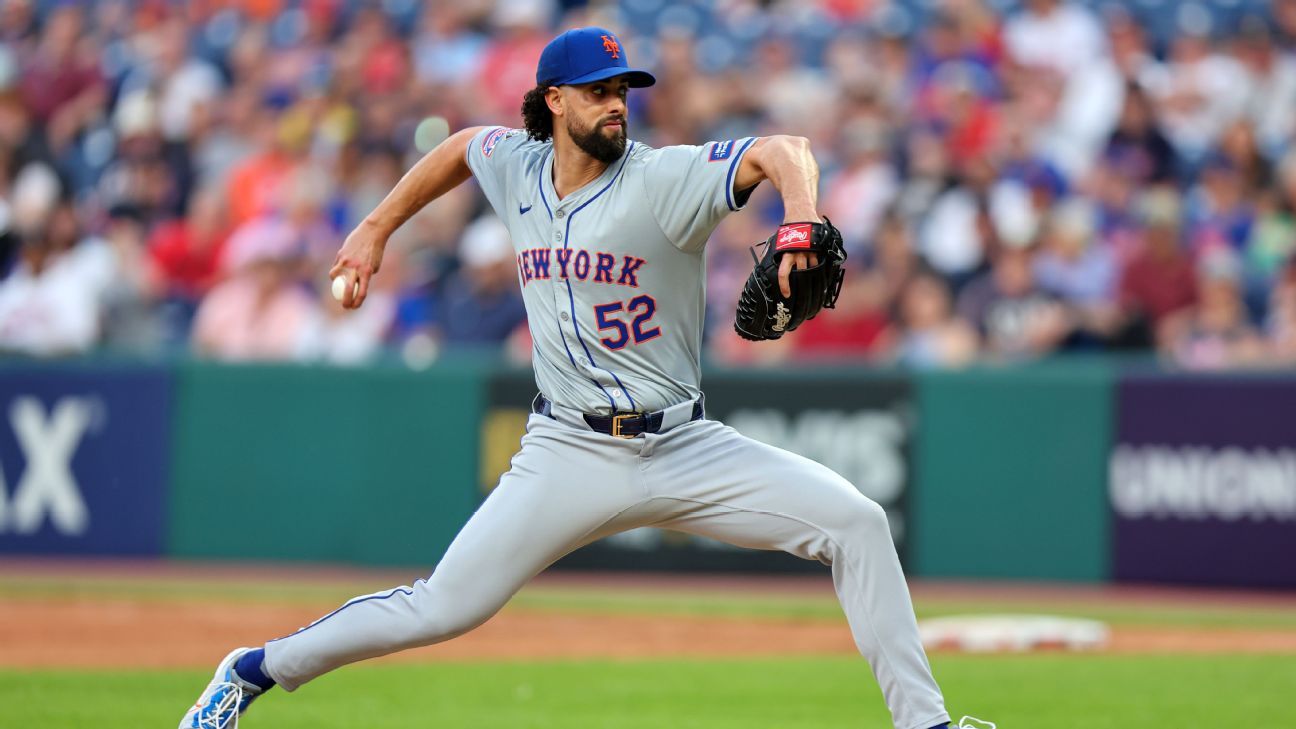
The Edmonton Oilers finally addressed their multiple-season problem in goal by acquiring Pittsburgh Penguins netminder Tristan Jarry.
The Oilers sent goalie Stuart Skinner, defenseman Brett Kulak and a 2029 second-round pick to Pittsburgh for Jarry and forward Sam Poulin.
How did both GMs do in this deal? Let’s dive in.

This trade is primarily about Jarry, of course. But it’s about someone else, too: Sergei Murashov.
The 21-year-old, who was a fourth-round pick by the Penguins in 2022, has grown into potentially their most promising prospect. He starred in the MHL, the premier Russian junior league, for two seasons after he was drafted. He also won four of his seven KHL games while posting a .928 save percentage in those stints.
Murashov came to North America last season where he posted a .922 save percentage over 26 ECHL games before a .913 mark in the AHL in 16 games. He has a .943 save percentage in 11 AHL games this season, while having a .912 save percentage and a 1.90 goals-against average in four games with the Penguins.
It’s the sort of trajectory that makes it evident that the Penguins have found their goalie of the future — who could be playing right now. Even more so given Murashov has a chance to be the latest Russian goalie to make an impact in what has been a golden age for Russian netminders.
Murashov has one more year left on his contract at a team-friendly $861,000. Arturs Silovs and Skinner, who are both on the NHL roster, are in the final years of their deals. Together, they cost the Pens a combined $3.45 million in cap space, with Silovs set to become a restricted free agent this coming offseason.
Skinner does provide them with an experienced option in net, given that Murashov is in just his second season of North American hockey while Silovs has only 32 games, with a career-high 13 of those performances coming this season.
It creates the sort of environment that allows the Penguins to continue developing Murashov with the idea that they can give him the necessary minutes, rather than trying to juggle his workload versus that of a goalie such as Jarry, who was a significant financial investment with two more years left on his contract at north of $5 million annually.
Getting Jarry’s contract off the books means the Penguins can now pave the way for Murashov to receive more playing time. They are now also armed with the sort of cap space that will allow them make other moves in their bid to reach the playoffs for the first time in three years.
PuckPedia projects that the Penguins have $9.164 million in salary cap space after the trade, which could give the Penguins an advantage entering the trade deadline. They entered Friday in the second Eastern Conference wild-card spot in a race that has 10 teams separated by six points.
Adding Kulak in the deal gives the Penguins an experienced top-six defenseman and someone who could anchor their bottom pairing. The Penguins have a clearly established top four, but have shuffled through their bottom-pairing options; they’ve had five defensemen who have played more than nine games and who have logged close to or more than 15 minutes per game. Kulak is averaging 17:42 in ice time per game this season.
Kulak can also provide the Penguins with another option on their penalty kill, as he has logged more than 100 short-handed minutes in two of his three most recent seasons.

Any personnel decision the Oilers make is going to be viewed through the prism of whether it can help them win the Stanley Cup now. Trading for Jarry — or any goaltender — while moving away from Skinner reflects that reality.
There had been more than enough evidence in place to suggest that the Oilers needed a change in net. Advancing to the Stanley Cup Final in consecutive seasons made it extremely clear that the Oilers are in a championship window. Constantly having to press the proverbial reset button on Skinner in both of those runs to the Cup Final, however, played a significant role in what made their chances of winning a title rather murky by comparison.
Skinner recovered the first time the Oilers pulled him and brought him back during the 2024 playoffs. He finished with a save percentage greater than .900 in eight combined Stanley Cup Final and Western Conference playoff games. Last postseason, Skinner had four games with a save percentage greater than .900 in the Cup Final and conference finals — with three of those games coming in the conference finals.
It’s an even more damning reality with the consideration that the Oilers have possessed one of the strongest defensive structures in the NHL since hiring Kris Knoblauch in November 2024. The last two years have seen the Oilers rank in the top eight in allowing the fewest shots per 60 minutes, the fewest scoring chances per 60 and the fewest high-danger scoring chances allowed per 60, according to Natural Stat Trick.
Only to then have the ninth-lowest team save percentage in 5-on-5 play over that same span.
This season has been no different. The Oilers are a top-10 team in terms of the fewest shots allowed per 60 and the fewest high-danger scoring chances allowed per 60. That’s why they entered Friday in the first of the two Western Conference wild-card spots.
But despite that strong defensive structure, they are last in team save percentage in 5-on-5 play. That’s also why they entered Friday in a wild-card spot instead of sitting atop the Pacific Division — granted, they’re just five points behind first place.
Another item that hinted that a change could be coming was the fact that Skinner and Calvin Pickard are in the final season of their respective contracts, at figures that could be moved. Skinner is earning $2.60 million this season, while Pickard is at $1 million.
Jarry provides the Oilers with a two-time All-Star goalie who they believe can give them the consistency that’s been missing. Five of his six most recent campaigns have seen Jarry finish with a save percentage of more than .900.
He will also be under contract for two more years after this one, at $5.38 million annually. That means he’ll come off the books after the 2027-28 season — the same time that superstar captain Connor McDavid‘s two-year extension will be over and could potentially see him hit free agency for the first time.
Will the Oilers have won a Cup by then? Or will the next two years see them get close only to fall short again? — Ryan S. Clark