South East Water supply crisis is familiar tale for customers
 by 0
by 0 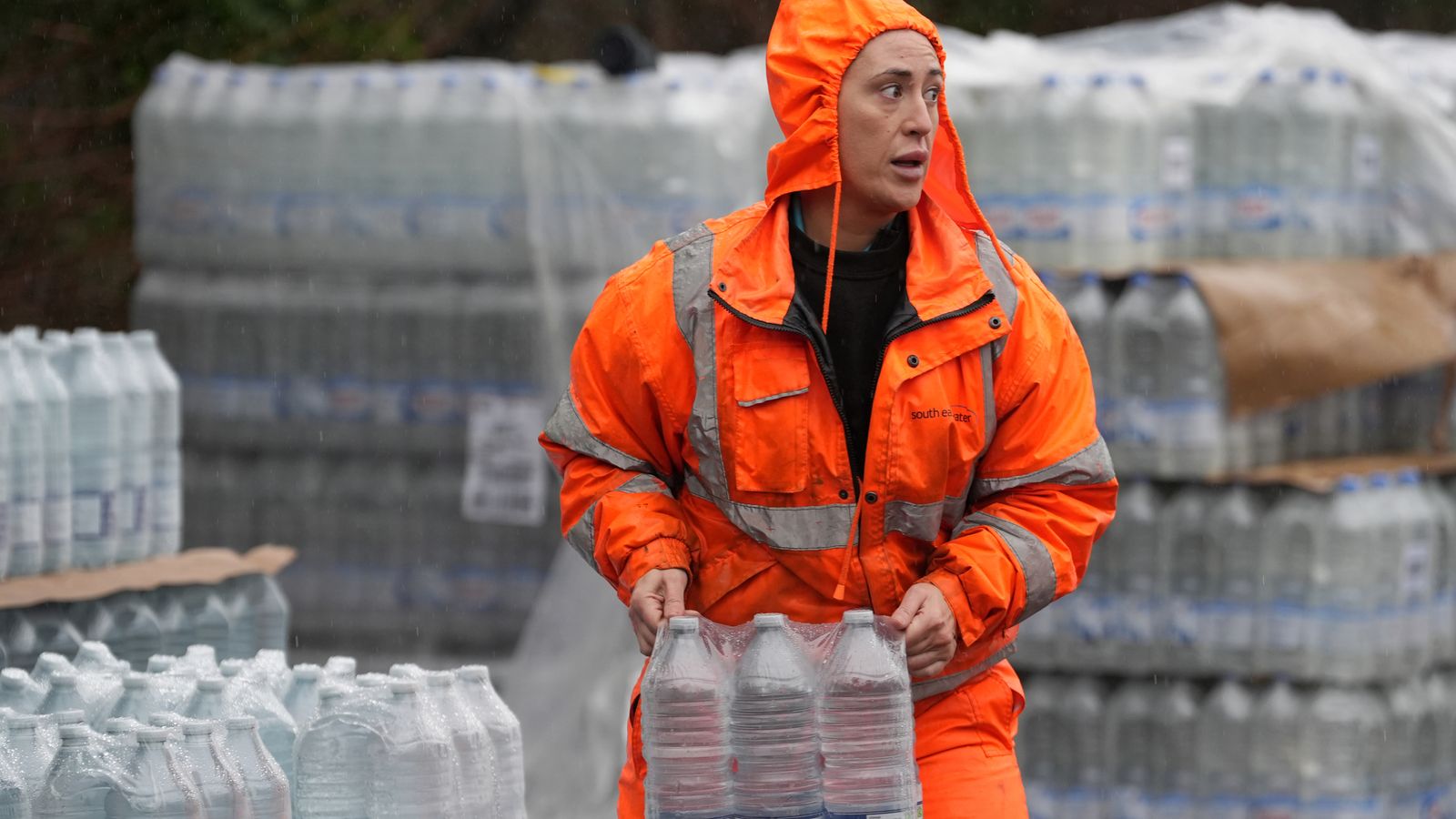
When South East Water (SEW) is in the news, the headlines do not generally make for comfortable reading.
While the water and sewerage industry and its regulators have little to cheer about, this water-only supplier is now facing calls to be nationalised – such is the strength of feeling over performance as it grapples with supply chaos.
It comes as 23,000 properties had been affected by supply issues across Kent and Sussex, and a major incident was declared in the two counties.
People entered a fifth day without water as Storm Goretti caused power cuts and burst pipes on Friday and Saturday last week. It followed a “water quality issue” in December, which meant 24,000 people suffered days without water in Tunbridge Wells.
A SEW statement on Wednesday said, “We are very sorry to all our customers who have been affected.
“We know and understand how difficult going without water for such a long period of time is and how difficult it makes everyday life.”
Here, Sky News will examine what’s gone wrong at the Kent and Sussex water supplier over many years and why its leadership team is facing such stringent criticism amid accusations of continued rewards for failure.
Who owns South East Water?
The company, which is responsible for supplies to 2.3 million homes, has been owned by a consortium of mainly foreign investment and pension funds known as HDF Holdings for nearly 20 years.
It has long faced criticism over the payments of dividends to shareholders while grappling with high debts, culminating in a fresh £200m cash injection a year ago to keep SEW afloat pending inflation-busting bill hikes agreed by water regulator Ofwat.
The 20% increase in the 2025-30 settlement (which is still subject to appeal by the company) was to allow for greater investment in neglected supply infrastructure.
The pension fund of lender NatWest also owns a 25% stake in SEW.
When approached by Sky News, the NatWest Group pension fund said: “We are extremely concerned by the impact these incidents are having on the households, businesses and other users who rely on SEW for water services.
“NatWest group pension fund will use its influence as a minority shareholder to direct SEW’s board to ensure these issues are fully resolved.”
Why is SEW not working?
A water industry source told Sky News that SEW was not fit for purpose, describing it as “an enormous failure”.
“The company is not as resilient as it needs to be”, they said.
“It’s a tiny company that has been patched together. They don’t have the interconnectedness to move water around their network like other companies do. They would point to needing more investment in resilience and their appeal is with the CMA now, but I don’t think that’s the full picture. You can see this is a failing company.”
Latest financial figures for the company’s 2024 to 2025 financial year show it recorded a £19.8m loss before tax, less than the £36.7m loss of a year earlier.
Why is SEW’s boss facing particular criticism?
SEW’s chief executive, David Hinton, has come in for direct criticism over years from local and national politicians as well as Kent residents.
Following a six-day water outage in Kent in 2022, he promised that lessons would be learned in areas including crisis management, communication, and system resilience.
Fast forward to an appearance before the Environment, Food and Rural Affairs (EFRA) Committee of MPs last week, Mr Hinton again suggested working from home was partly to blame for repeated water supply issues.
He and his senior leadership have been recalled to give evidence again.
Mr Hinton suggested the rise in people working from home in the commuter area has added to supply pressure, as he did in 2023, to explain a hosepipe ban.
The chair of the EFRA committee announced the recall as he was “deeply sceptical about the company’s version of events to date, and its board’s track record of holding the company to account”.
Mr Hinton’s pay rose last year. His annual bonus increased to £115,231, from £112,560 the year before, while his base salary grew to £307,274 from £294,042.
What’s the regulator done?
Perhaps we should be grateful that SEW does not handle storm drains, given the massive penalties handed out by Ofwat in recent years over sewage spills more widely.
We have heard little since 2023 when Ofwat opened an investigation into SEW over the reliability of supply following a string of outages – the worst lasting 23 days.
It has long faced criticism over leaks, however, and paid a price.
The most recent penalties came in 2023/4 when Ofwat announced an £8m fine for a failure to meet targets. That came on top of a further £3.2m charge for supply disruption.
Should Ofwat have not done more?
The regulator said on 15 January that it had opened a fresh investigation into SEW.
Its senior director for enforcement, Lynn Parker, said: “The last six weeks have been miserable for businesses and households across Kent and Sussex with repeated supply problems.
“We know that this has had a huge impact on all parts of daily life and hurt businesses, particularly in the run-up to the festive period.
“That is why we need to investigate and to determine whether the company has breached its licence condition.”
It places SEW at risk of another large fine – at a time it can least afford it.