Is America surrendering Antarctica to its rivals?
 by 0
by 0 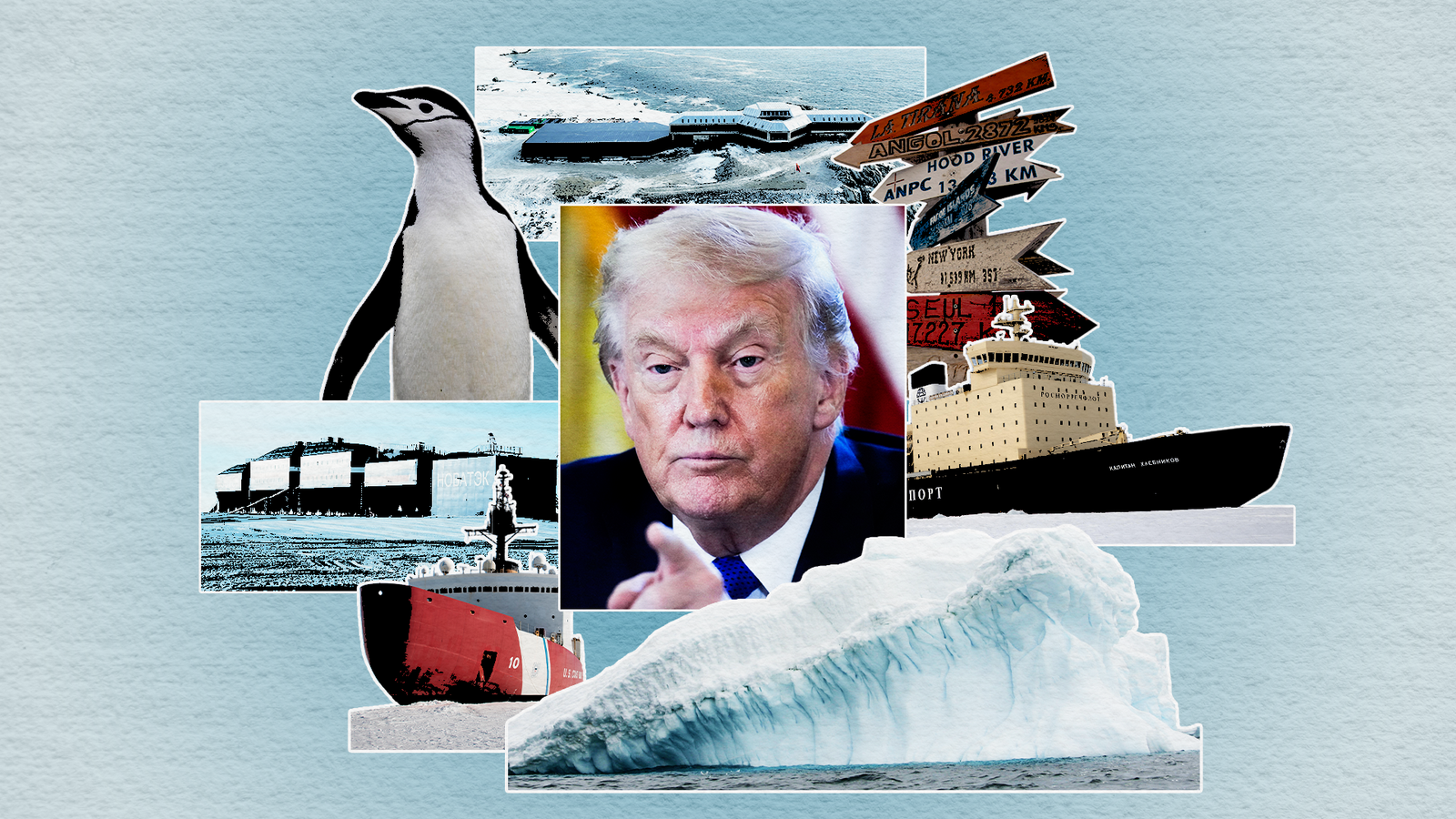
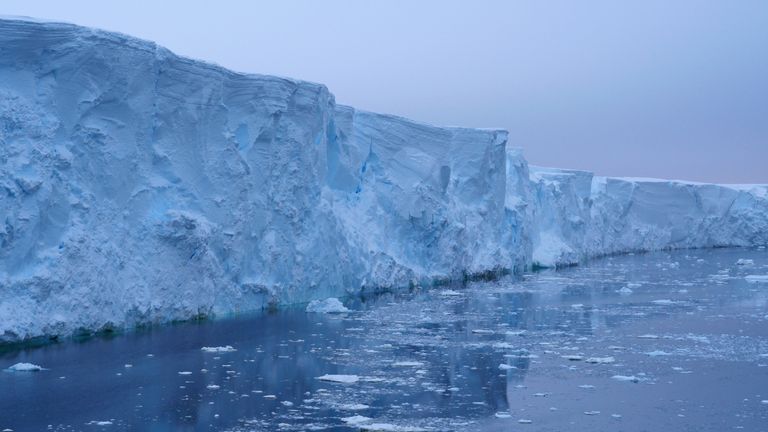
As Donald Trump fights for control of arctic Greenland, is he losing at the other end of the world and leaving it open for rivals like China?
While US designs on Greenland are entirely deliberate, withdrawal of influence in Antarctica appears to be accidental.
Proposed cuts to climate-related research – which covers much of what is done in the rapidly melting Antarctic – are “catastrophic”, according to Prof Ted Scambos, a glaciologist at the University of Colorado and veteran of US Antarctic research.
In Antarctica, cuts to science have wider implications because research is how nations have long maintained their influence in the continent.
The 1959 Antarctic treaty prohibits military or commercial activities on the frozen continent.
Prior to that, the UK along with Argentina, Australia, Chile, France, New Zealand and Norway had territorial claims on parts of the continent.
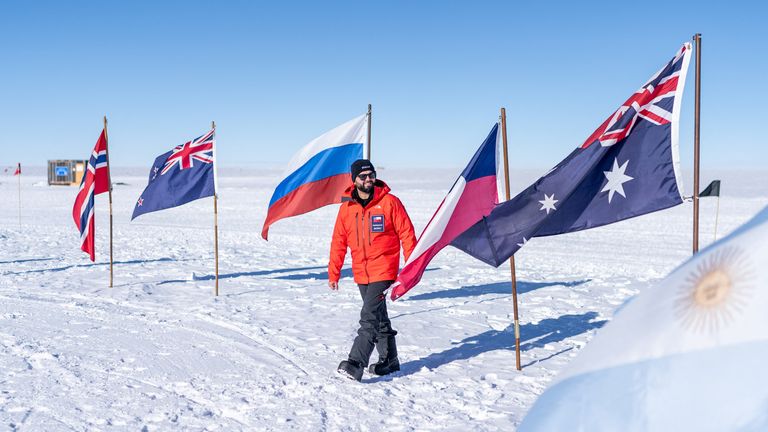
Those claims are “in abeyance” – effectively suspended – under the treaty, but any nation can do scientific research.
Those with interests in the region, maintain their presence via scientists, research stations and the hardware like icebreakers and aircraft needed to support them.
The UK is no exception.
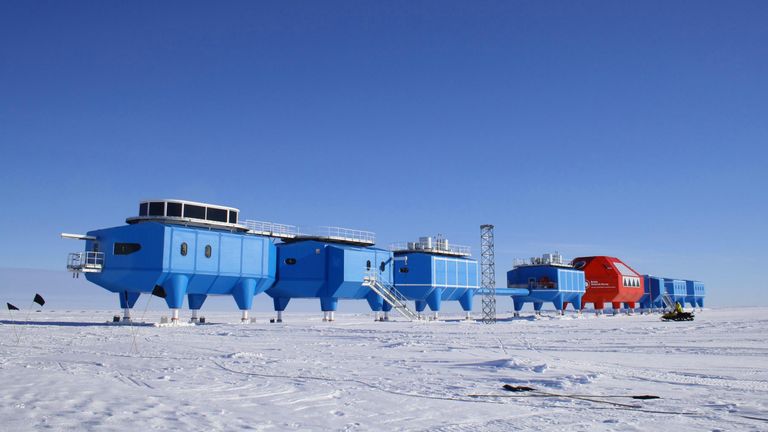
Its research bases at Rothera on the West Antarctic Peninsula and Halley VI further east, are located at the boundaries of its wedge-shaped claim to the continent extending from the coast to the South Pole.
It makes no secret of the fact the scientific presence serves two purposes. “The Antarctic treaty says that Antarctica is a continent for peace and science,” said Prof Dame Jane Francis, director of the British Antarctic Survey.
“We are contributing to the treaty by doing world-class science, but also by having a UK presence in Antarctica.”
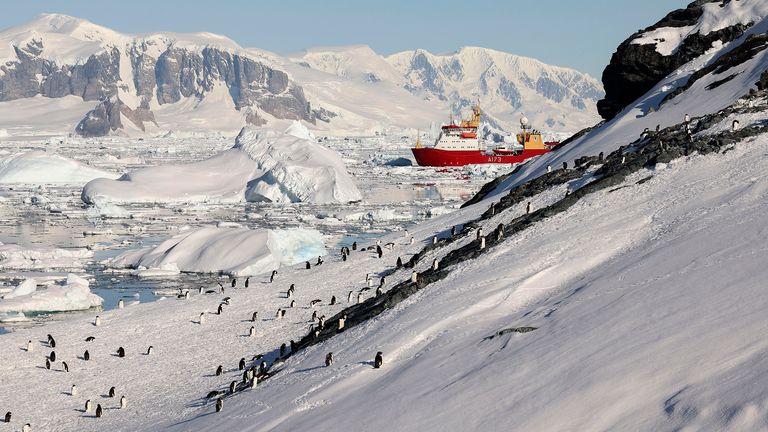
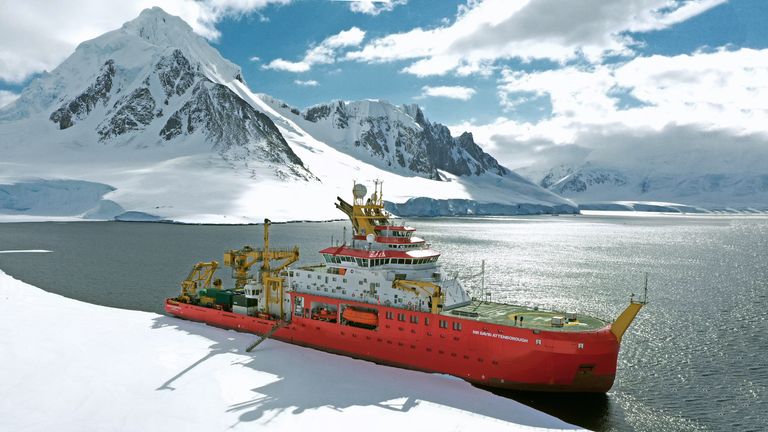
Sir David Attenborough is the UK’s muscle when it comes to Antarctic geopolitics – well, the £200m research icebreaker named after him that serves as floating laboratory and re-supply vessel for British bases on the continent is.
America has long been one of the most dominant players on a continent one and half times larger than the contiguous US.
Its South Pole Station is one of the largest and best-funded on the continent.
A base that’s strategically located where all other territorial claims to Antarctica converge: at the pole.
Read more:
Antarctica’s underwater tsunamis
What’s happening in Antarctica that worries scientists most?
But this year, as a result of Mr Trump’s cuts and a decision not to renew the lease for its only Antarctic icebreaker, the US has no dedicated ship and far fewer scientists in Antarctica.
It’s left America in the unusual position of having to lease an icebreaker owned by Ukraine to help maintain its operations this year.
A situation that hasn’t gone unnoticed.
“There is a change in the leadership and the balance of power, if you like,” said Prof Francis.
It presents a potential opportunity for the UK to forge new research partnerships.
But others too.
China has been rapidly expanding its presence in Antarctica.
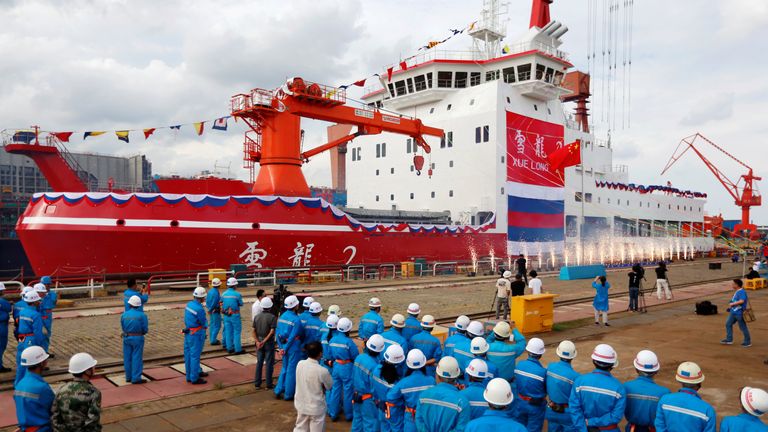
China’s Antarctic research agency, CHINARE, now has five bases on the continent and opened a new year-round facility last year. Beijing recently announced another is in the works.
In 2024, it commissioned a new icebreaking ship which, along with its predecessor, are both working around Antarctica this year.
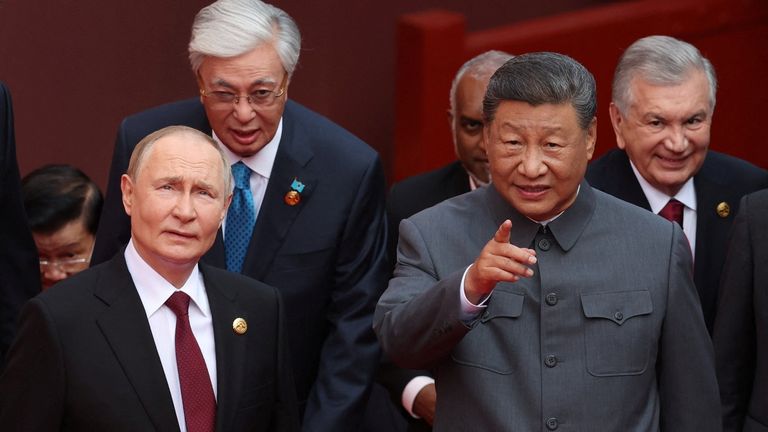
Like other signatories to the Antarctic Treaty, China conducts research, sometimes in partnership with other states.
There have been signs China, as well as Russia, may have interests in the region outside the scope of the treaty.
China has resisted efforts to increase protection for fisheries in the Southern Ocean.
In 2020, Russia announced the discovery of what it claims was the world’s largest oil reserve on the seabed close to Antarctica.
Moscow insisted the survey work required to find it was scientific in nature and has, so far, made no moves towards exploiting it.
“Countries that have signed the Antarctic Treaty, are there to do scientific research,” said Prof Scambos.
“But they have an eye on…any sort of future for Antarctica. Be it to maintain the treaty or to rethink the treaty in terms of exploitation.”
No country has made formal moves to withdraw or modify the treaty.
Unlike the Arctic, it’s distance from most of the world’s major powers make it less important geopolitically.
Its inaccessibility, not to mention year-round sea ice and six months of darkness, also explains why its natural resources have been largely ignored.
But like the Arctic, it is warming and its ice sheets melting.
And with the Trump administration threatening to ignore territorial conventions when it comes to places like Greenland, who’s to say how long the Antarctica will remain unspoilt?